Moment of Memory

기억의 순간

기억은 언제나 흐릿하게 우리 곁을 지킨다. 분명히 존재했던 어떤 감정, 어떤 표정, 어떤 장소는 시간의 흐름 속에서 점차 희미해지고, 그 빈자리를 상상과 왜곡, 그리고 마음속 잔상이 채워나가게 된다. 전민수 작가의 회화는 바로 그 틈 — 기억과 상상, 현실과 허상의 경계에서 시작된다.

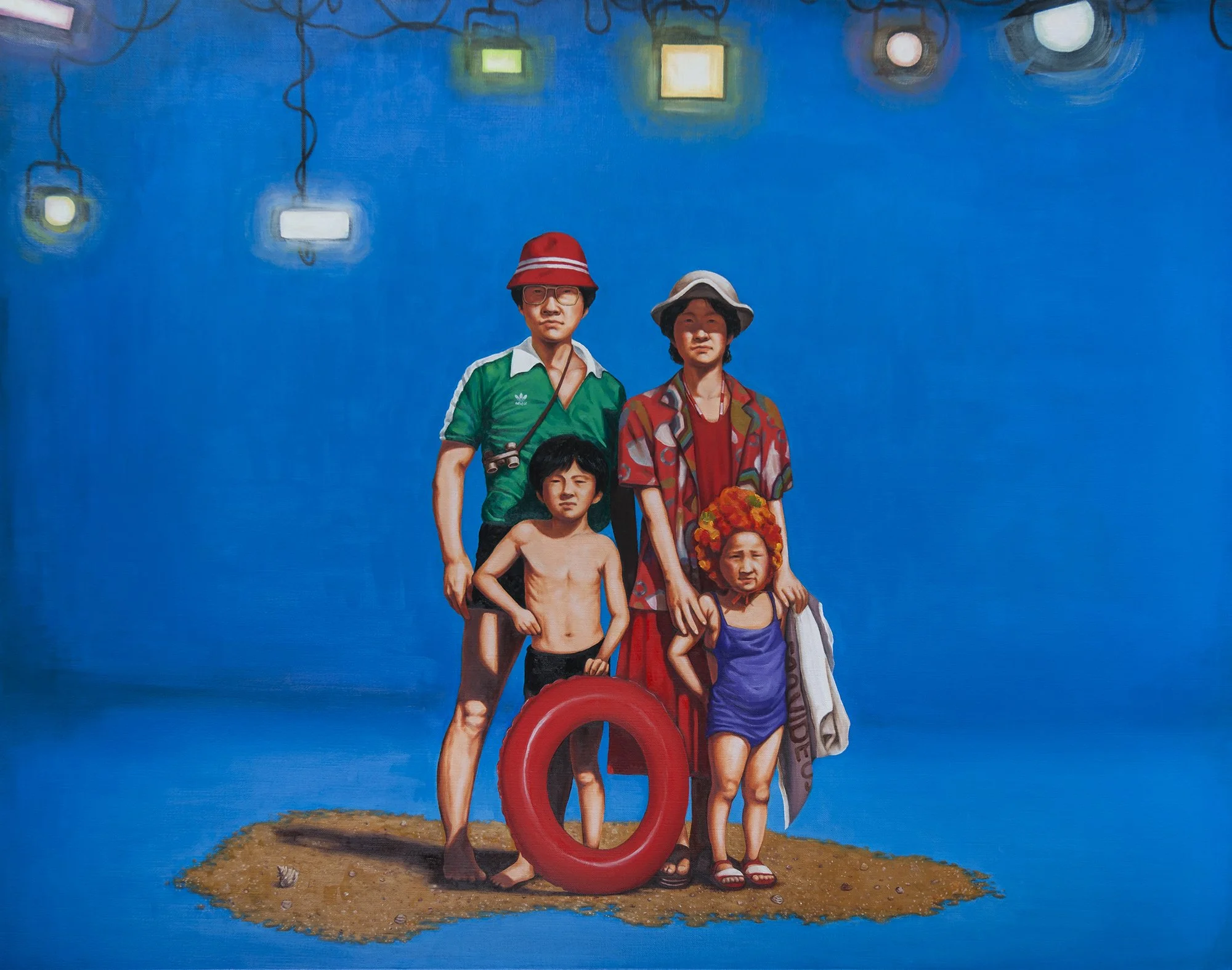
작가의 화면에는 가족이 있다. 그러나 그 가족은 우리가 알고 있는 단란하고 명확한 ‘가족사진’의 이미지와는 다르다. 크로마키 배경 앞에 서 있는 가족은 여행지의 사진처럼 보이지만, 사실상 어디에도 도착하지 않은 존재들이다. 푸른 배경은 어디든 갈 수 있을 것 같은 환상을 부여하지만, 결국은 도달하지 못한 장소, 되돌릴 수 없는 과거의 시간만을 환기시킨다. 아버지는 카메라 앞에서 여전히 권위 있게 서 있지만, 가족은 그 시선 너머에서 지쳐 있고, 무언가를 말하지 못한 채 그 자리를 버티고 있다.

이러한 작업 속 장면들은 때때로 말이 없던 여행의 풍경을 소환하기도 한다. 휴게소조차 없던 시절, 갓길에 정차한 버스, 차창에 비친 흐릿한 얼굴, 서로를 바라보지 않는 가족들. 말없는 그 여행은 작가에게 있어 현실의 가족인지, 기억 속의 유령인지조차 분간되지 않는 ‘기억의 몽타주’다. 전민수의 회화는 이러한 개인적 회상의 편린을 통해, 우리 모두가 경험했을 법한 보편적 감정의 풍경을 끄집어낸다.

작가의 세계에는 유년의 고요한 피난처 또한 존재한다. 만화책으로 만든 작은 공간에 웅크린 아이의 모습은 종이로 된 상상의 세계가 얼마나 따뜻하고 안전한지, 또 동시에 얼마나 고립되고 외로운지를 보여준다. 그곳은 어머니의 자궁처럼 평온하지만, 세상과 단절된 폐쇄의 공간이기도 하다. 아이는 숨는다. 현실의 복잡함을 견딜 수 없을 때, 우리는 종종 어린 시절의 자기 자신처럼 자신만의 틈을 찾는다. 작가는 그 틈을 세심하게 응시하고, 표현하고 있다.

이러한 작업들은 단순한 과거의 재현이 아니다. 그것은 ‘재구성된 기억’이다. 카메라 앞에서 웃고 있는 아버지와 아이들, 팩을 하고 웃고 있는 형제, 유리창에 비친 그림자 같은 얼굴들. 각각의 장면들은 마치 오래된 사진을 스캔하다가 흔들려버린 듯 왜곡되고, 분절되며, 흐릿하게 재편된다. 오래된 텔레비전 모니터 속에서 분해되는 가족의 얼굴처럼, 우리의 기억은 언제나 조각나 있고 편집되며, 어떤 감정은 끝내 말로 다할 수 없다.

따라서 그의 작업들은 단지 작가의 가족사를 보여주는 것이 아니다. 그것은 우리 모두가 간직하고 있는 ‘사소하지만 지워지지 않는 장면들’에 관한 이야기다. “그날은 아무 일도 없었지.” 작가가 소환하는 이 한 문장은, 결국 가장 많은 일이 일어난 날을 가리킨다. 말도 없고, 사건도 없었던 평범한 하루. 하지만 돌이켜 보면 그 속에는 이미 모든 감정의 씨앗들이 심어져 있었다. 상처와 무너짐, 떠남과 소외는 그렇게 조용히 시작된다.

전민수의 회화 속 인물들은 종종 어딘가를 떠나고 있다. 칠성 아래에서 첫 생일을 맞이한 아이, 칼라 사진 속의 나와 흑백으로 흐릿해진 엄마, 얼굴 위에 알록달록한 입자가 덧입혀진 엄마의 초상. 이들은 모두 지금은 볼 수 없거나, 다시 만날 수 없는 존재처럼 화면을 채운다. “멀리 떠나는 꿈. 그리고 여름.”이라는 문장처럼, 작가의 기억은 계절과 감정의 이미지로 되살아난다. 그것은 시간의 간극을 딛고 흐르는 물이며, 흐릿한 하늘 아래에서 아직 끝나지 않은 질문이다.

작가의 외할아버지와 이모들의 사진은 특히나 강한 낯섦을 안겨준다. 외계에서 온 것 같은 피부색, 무대 위에 세운 듯한 정형화된 자세는 과거라는 시간이 우리에게 얼마나 이질적인 감각으로 다가오는지를 상기시킨다. 가족은 친밀하지만, 동시에 이방인이다. 얼굴은 익숙하지만, 삶은 낯설다. 고양이처럼 주변을 감싸는 감정—의심과 거리감—은 작가가 기억을 대하는 방식의 핵심이기도 하다.

작가의 《기억의 순간》은 사진으로 남은 장면들, 그 장면 뒤에 감춰진 감정, 그리고 시간이 만든 왜곡을 그려낸다. 그것은 과거에 대한 단순한 향수가 아니라, 끊임없이 ‘현재 속으로 다시 살아나는’ 기억의 복원이다. 유년의 감정이란 항상 진지하고, 이상하고, 슬며시 웃음이 나올 만큼 기이하다. 작가는 그 진지하고 이상한 세계를 연극처럼, 혹은 영화의 한 장면처럼 재구성한다.

작가는 묻는다. 우리가 기억하는 가족은 과연 실제였는가? 혹은 우리가 기억하기를 원했던 방식으로만 존재하는 허상이었는가? 하지만, 작가는 그의 회화를 통해 이 질문들을 강요하지 않는다. 다만 조용히, 부드럽게, 한 장면 한 장면을 꺼내어 놓는다. 말하자면, 이것은 기억의 한 컷이고, 감정의 앨범이며, 아직도 이어지고 있는 이야기라는 것이다.

그렇게, 작가가 그려낸 ‘기억의 순간’은 우리 모두의 것이 된다. 한 장의 사진에서 시작된 장면은, 결국 우리의 마음속으로 들어와, 조용히 재생되고 있다.

글. 임대식

Moment of Memory

Memory always keeps a vague vigil over us. Certain emotions, expressions, and places that undeniably existed gradually fade in the flow of time, their void being filled by imagination, distortion, and the afterimages in our minds. Artist Jeon Min-su's painting begins right in that gap—at the boundary between memory and imagination, reality and illusion.

The artist's canvas features a family. However, this family is different from the image of the harmonious and clear 'family portrait' we are familiar with. Standing in front of a chromakey background, the family looks like a photograph from a trip, but they are, in fact, beings who have arrived nowhere. The blue background grants the illusion of being able to go anywhere, yet it only evokes places never reached and the past time that cannot be retrieved. The father still stands authoritatively before the camera, but the family, beyond his gaze, is exhausted, enduring the moment without being able to say something.

The scenes in this body of work sometimes summon up the landscape of silent journeys. A bus parked on the roadside in a time when there weren't even rest stops, hazy faces reflected in the window, family members not looking at each other. For the artist, this silent journey is a 'montage of memory,' where it is indistinguishable whether it is his real family or ghosts from his past. Jeon Min-su's painting, through these fragments of personal recollection, draws out a universal emotional landscape that all of us might have experienced.

The artist's world also contains the quiet refuge of childhood. The image of a child huddled in a small space made of comic books shows how warm and safe, yet simultaneously isolated and lonely, the paper world of imagination can be. It is a space as tranquil as a mother's womb, but also one of enclosure, disconnected from the world. The child hides. When we cannot endure the complexities of reality, we often seek out our own gaps, much like our childhood selves. The artist meticulously observes and expresses that gap.

These works are not a mere reproduction of the past. They are 'reconstructed memories.' The father and children smiling before the camera, siblings laughing while wearing face packs, shadow-like faces reflected in a glass window. Each scene is distorted, fragmented, and hazily reorganized, as if an old photo was scanned but shaken. Like the family's faces disintegrating on an old television monitor, our memories are always fragmented and edited, and some emotions can never be fully articulated.

Therefore, his works do not simply present the artist's family history. They are about the 'trivial yet indelible scenes' that all of us harbor. "Nothing happened that day." This single sentence the artist summons ultimately points to the day when the most things happened. An ordinary day with no words and no major events. But looking back, all the seeds of emotion were already planted within it. Hurt and collapse, departure and alienation begin quietly in this manner.

The figures in Jeon Min-su's paintings are often leaving somewhere. A child celebrating their first birthday under the Big Dipper, the "me" in a color photo with a mother blurred to black and white, a mother's portrait overlaid with colorful particles on her face. They all fill the canvas like beings who can no longer be seen or met again. Like the phrase, "The dream of leaving far away. And summer," the artist's memory is revived through images of seasons and emotions. It is water flowing across the time gap, and a question that remains unanswered beneath a hazy sky.

The photographs of the artist's maternal grandfather and aunts particularly instill a strong sense of unfamiliarity. The skin color, as if from an alien world, and the formalized posture, as if staged, remind us of how alien a sensation the time called "the past" is to us. Family is intimate, but simultaneously alien. The faces are familiar, but the lives are strange. The surrounding emotions—suspicion and distance, like a cat—are also central to how the artist engages with memory.

The artist's Moment of Memory depicts scenes preserved in photographs, the emotions hidden behind those scenes, and the distortions created by time. It is not mere nostalgia for the past, but the restoration of memory that is constantly 'brought back to life in the present.' The emotions of childhood are always earnest, strange, and oddly amusing. The artist reconstructs that earnest and strange world like a play or a scene from a film.

The artist asks: Was the family we remember truly real? Or were they merely illusions that existed only in the way we wished to remember them? However, the artist does not impose these questions through his paintings. He merely, quietly and gently, brings forth one scene after another. In other words, this is a single cut of memory, an album of emotions, and a story that is still ongoing.

Thus, the 'Moment of Memory' depicted by the artist becomes a moment for all of us. The scene that began with a single photograph eventually enters our hearts and is quietly played back.

Written by Lim Dae-sik

The Last Snow of Spring

The Last Snow of Spring

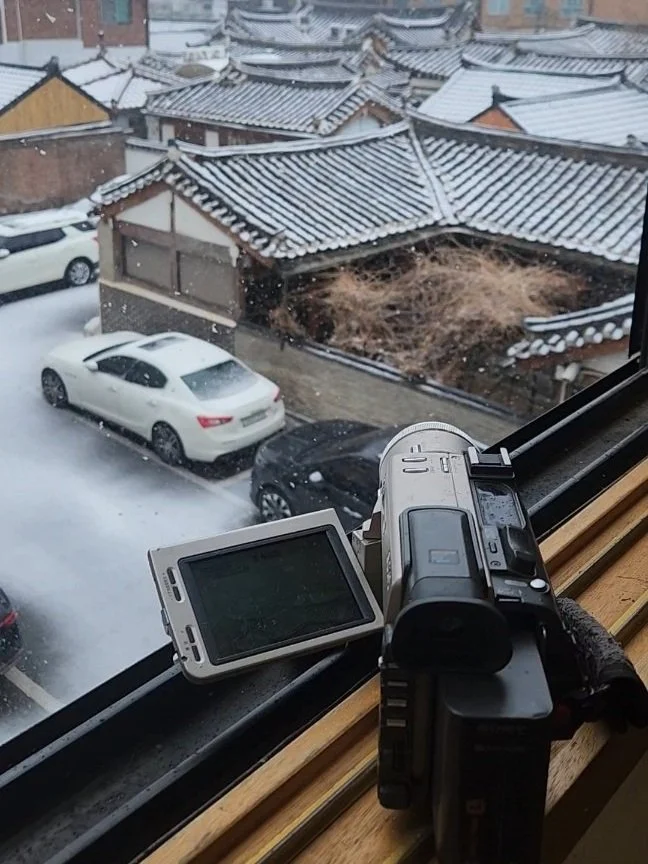
I felt a bit reluctant to let winter go, but to my surprise, a heavy snowfall began in the morning. It was the day I was set to visit the National Heritage Administration in Daejeon for my first-ever bid proposal presentation. I had rushed through preparations all weekend, but I wanted to present the direction of my documentary filmmaking in a calm and confident manner. Even if I wasn’t selected, I needed the experience. More than anything, I hoped to hear words of encouragement from at least one person who resonated with my vision.

Am I truly an extrovert, an ‘E’? I often appear quiet and introverted, but I seem to gain energy from meeting people. I was a bit nervous while preparing for the presentation, but I managed to wrap up my story within ten minutes. (Though it was too short to properly showcase my videos.) The curiosity in the judges’ questions lifted my spirits. Stepping outside after the presentation, I looked up at the sky—it was brilliantly clear and beautiful.

During my pitch, I shared this insight about documentary filmmaking:
"There are always unpredictable variables on-site. But if you stay patient and positive, beauty will eventually unfold beyond the difficulties, and good opportunities will come your way. This is why I always realize that the answer lies in the field."
Today felt exactly like that.

As I gazed at the sky on my way back to Seoul, my heart felt just as clear. Maybe all my worries and concerns also have answers waiting in the real world. I like standing there, facing everything head-on. Rather than avoiding difficulties out of fear, wouldn’t it be better to embrace them? If it snows, let the snow fall on me; if it rains, let me feel the rain. Because in the end, the clouds will clear. And after the snow, the sky is always the brightest.

봄에 내리는 마지막 눈

겨울이 지나가는 것이 아쉽기는 했지만, 예상보다 많은 눈이 오전부터 내렸다. 처음으로 입찰을 신청하고, 제안서 발표를 위해 대전의 국가유산청을 방문하는 날이었다. 주말 내내 급하게 준비하느라 서두르기는 했지만, 그동안 해왔던 다큐멘터리 제작의 방향을 편안하게 소개하고 싶었다. 꼭 선정되지 않더라도, 경험이 필요했고, 한 분이라도 내 생각과 방향을 지지해 주는 응원의 말을 듣고 싶었다.

역시 나는 외향적인 ‘E’일까? 겉으로 보기에는 조용하고 내향적으로 보일 때도 있지만, 결국 사람들을 만나야 에너지를 얻는 듯하다. 발표 전까지 준비하느라 긴장도 조금 되었지만, 무사히 내 이야기를 10분 만에 마칠 수 있었다. (영상까지 보여주기에는 많이 부족한 시간이었지만.) 질의응답 시간에 심사위원들의 호기심 어린 반응이 나를 기분 좋게 만들었다. 발표를 마치고 나와 하늘을 올려다보니, 너무도 맑고 아름다웠다.​

발표 중, 영상 관련 제안을 하면서 이런 전략을 이야기했다.

"다큐멘터리 촬영 시, 현장에서는 예상할 수 없는 변수들이 많습니다. 하지만 항상 긍정적으로 기다리다 보면, 악조건 뒤에는 반드시 아름다운 풍경이 펼쳐지고, 좋은 기회는 오게 마련입니다. 역시, 현장에 답이 있다고 매번 깨닫습니다."​

오늘이 딱 그랬다.

하늘을 보며 기분 좋게 서울로 돌아오는 길, 내 마음도 하늘 같았다. 역시 많은 걱정과 고민들도 결국에는 현장에서 답을 찾을 수 있는 걸까? 당당히 그곳에 서 있는 것이 좋다. 두려움에 젖을까 봐 피하기보다는, 눈이 오면 눈을 맞고, 비가 오면 비를 맞으며 그대로 느끼는 것이 더 낫겠다. 언젠가는 모두 개일 테니까. 눈이 온 뒤, 그 맑은 하늘을 볼 수 있으니까.

Spring

Spring is an empty land. In a place where nothing exists, the snow melts, and new sprouts emerge. Just as plants and flowers grow, spring always begins from nothingness. So do I. I always start anew, dreaming of a hopeful spring with you. This year, anticipation and anxiety intertwine more than ever. But still, I embrace hope. That hope will not fade. It will be okay. It is okay to dream, to share those dreams with others. It is okay to feel excitement. It is okay to be a little arrogant, to show confidence, to have regrets. If I sincerely apologize, I will be forgiven. And so, I begin again. And once again, spring returns.

봄은 빈 땅이다. 아무것도 없는 곳에 눈이 녹고, 새싹이 돋아난다. 식물과 꽃들이 자라나듯, 봄은 언제나 무에서 시작된다. 나도 그렇다. 늘 무에서 시작하며, 너와 함께 희망의 봄을 꿈꾼다. 올해는 유난히 기대와 불안이 교차한다. 하지만, 조금 더 희망을 품어본다. 그 희망은 날아가지 않을 것이다. 괜찮을 것이다. 좋은 꿈을 꾸고, 그것을 누구에게 말해도 괜찮을 것이다. 설렘을 가져도 된다. 때로는 건방져도, 잘난 척해도, 후회해도 괜찮다. 미안한 마음으로 사과하면, 받아줄 것이다. 그렇게 다시 시작하면 된다. 그리고, 다시 봄

그냥 감기다

몸이 나약해지니 왠지 준비했던 프로젝트에 대해 확신이 흐려지고 두려워지기까지 한다. 이럴때 보면 사람은 참 나약하다. 금방 좋았다가도 조금만 상처받아도 흐트러지니 말이다. 그러니 우리에게 가끔씩 다가오는 어려운 일들은 어쩜 그냥 감기처럼 스쳐가는 것일지도 모른다. 그것때문에 모든 일들이 잘못된 것 같고, '나'라는 존재가 무의미하다고 느낄수도 있지만... 괜찮다. 그냥 감기다 몇일 푹 쉬면 다시 잊어버릴 일들이다. 

몸이 나약해지니 왠지 준비했던 프로젝트에 대해 확신이 흐려지고 두려워지기까지 한다. 이럴때 보면 사람은 참 나약하다. 금방 좋았다가도 조금만 상처받아도 흐트러지니 말이다. 그러니 우리에게 가끔씩 다가오는 어려운 일들은 어쩜 그냥 감기처럼 스쳐가는 것일지도 모른다. 그것때문에 모든 일들이 잘못된 것 같고, '나'라는 존재가 무의미하다고 느낄수도 있지만... 괜찮다. 그냥 감기다 몇일 푹 쉬면 다시 잊어버릴 일들이다. 

Keith Haring

예술은 너무 어렵고 부담스러웠다. 흰 캔버스에 무엇을 그려야할지 두려웠었는데 키스 해링을 알고 난후로 즐거운 그림은 보는 사람도 즐겁다라는 생각에 용기를 얻고 작업을 시작할 수 있었다. 무거울 필요 없다. 아무리 가볍고 쉬워 보여도 늘 고민과 어려움은 담겨져 있다. 억지로 어렵게 표현해서 특별한 문자를 쓰는 양 으시대는 시대는 끝났다. 이미 그런것들이 지루한 것을 모두 알고 있다.

"통증을 느끼는 것은 힘을 낼 수 있다는 것입니다."

둘째 율이와 만나기 위해 긴시간 고생했던 은수는 분만당일에도 역시 쉽지 않았다. 12시간동안 분만진통을 하다가 결국 진전이 없자 교수님은 수술은 권했지만  갑자기 나타난 치프(chief)의 도움으로 한번 더 기회를 만들수 있었다. 분만통증이 올때마다 모두 함께 산모와 호흡을 같이 했지만 생각보다 어려웠다. 오랜 병원생활로 지쳐있던 은수는 힘이 나지 않아 포기해야 싶었지만 조금씩 나아지더니 결국은 자연분만을 하게 되었다.

어려운 상황속에서 포기하려던 우리에게  치프(chief)가 한말이 자꾸 머리에 남는다. "통증이 있어야 힘이 생기는 겁니다. 무통주사를 맞게 되면 오히려 통증을 느끼지 못하여 힘이 생기기 어렵습니다. 통증을 느끼는 것은 힘을 낼 수 있다는 것입니다." 

여기 한명 더 추가요!

2월 5일 금요일, 드디어 힘든 시간들을 이겨내고 둘째 '율'이와 만난다.  우리 식구는 한명 더 추가되어서 4명이 된다. 곧 3월이 되면 설이도 이사한집으로 돌아오게 되어 온전히 우리가족들이 모여살게 된다. 전과달리 많은 시간들을 가족에게 희생해야 하지만, 전혀 아쉽지 않다. 나의 삶에서 또 다른 시작! 두근두근 설레이는 기분을 오랫만에 느낀다.

영상통화

병원에 3개월 가까이 지내고 있는 우리 은수, 무사히 지금까지 잘 견뎌왔지만 어쩌면 이제 매일 혼자 식사를 하는 내가 못견딜 것같다. 혼자 식사의 어려운점은 대부분 대충 먹는 경우이지만 더 힘든것은 식사중에 먹는것에만 온전히 집중하지 못한다는 것이다. 식사 뿐이 아니고 모든 일에서 집중은 혼자 있을때가 더 어려운 거 같다. 어쩌면 "나 집중 좀 하게 혼자있게 내버려 둬"가 아니라 "나 집중 좀 하게 제발 내곁에 있어줘!"라고 하는게 맞을듯 하다.