
Memont of Memory
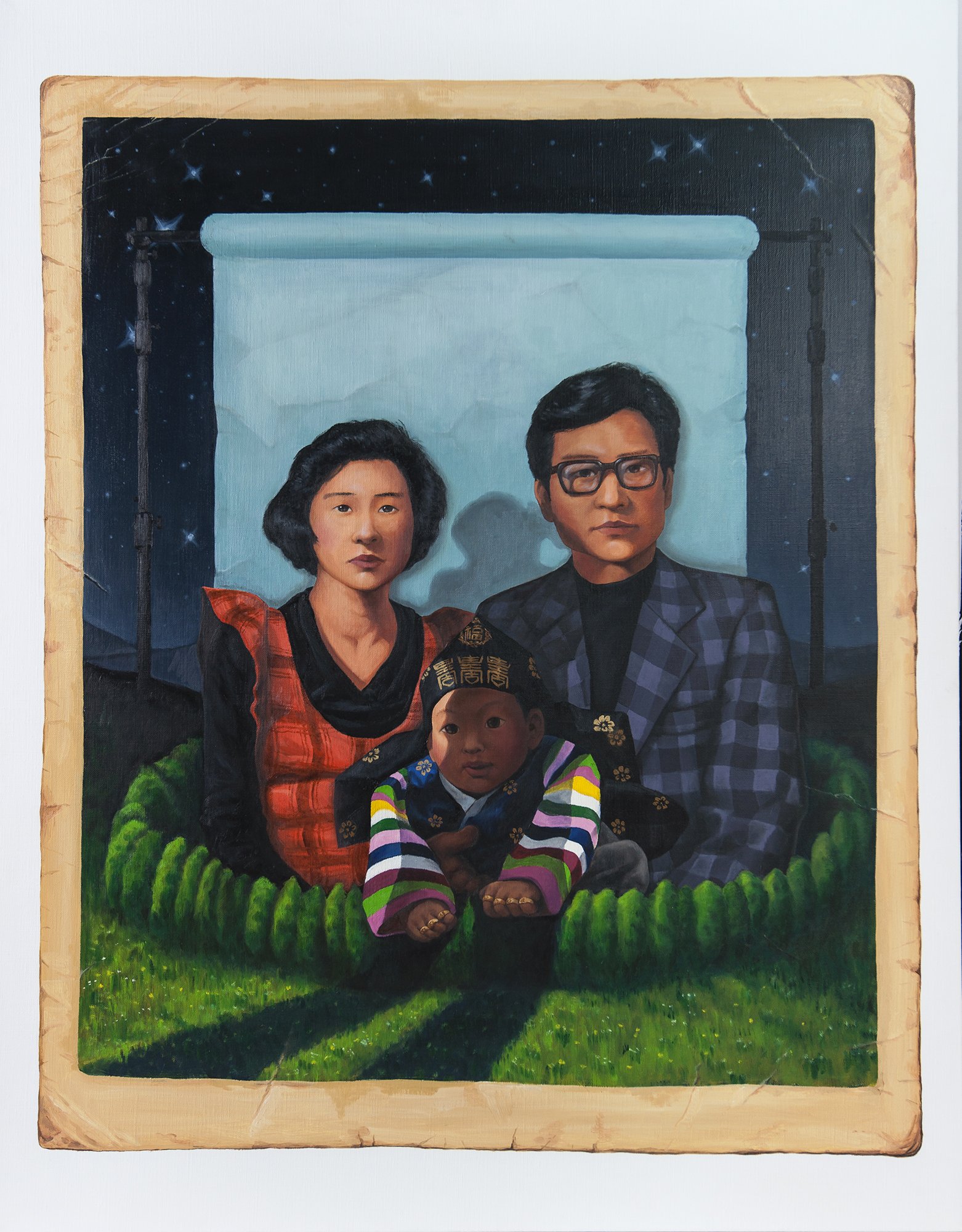
칠성 아래에서 Oil on canvas, 91x116.8cm, 2012
첫 번째 생일에 7개의 돌반지를 낀 채 사진을 찍은 장면. 장남, 장손으로서의 의미도 있지만, 지금 보니 숫자 7이 이상하게 신비롭다. 밤하늘처럼 칠흑 같은 배경 위에서, 칠성 아래에서의 기도처럼 조용하고 강렬한 생의 시작.
Under the Seven Stars
A photograph taken on my first birthday, wearing seven stone rings. Beyond its meaning as the eldest son, the number seven now feels mysteriously symbolic. Against a pitch-black background like the night sky, it marks a quiet yet powerful beginning of life like a prayer beneath the Big Dipper.
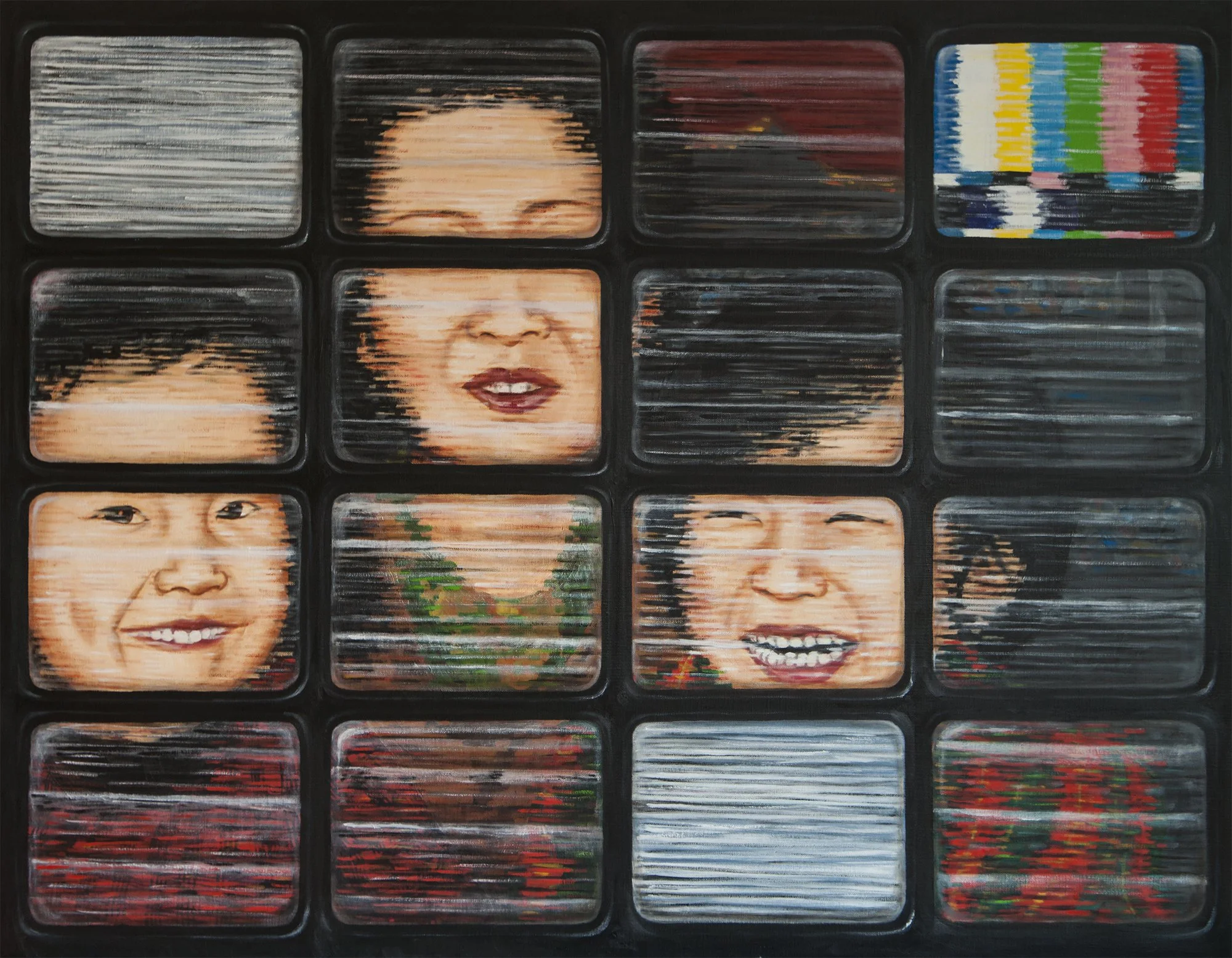
가족, 다시보기 Oil on canvas, 72.7x90.9cm, 2013
오래된 TV 모니터가 가족의 얼굴을 흩어놓는다. 분절되고 흐릿한 이미지들. 우리가 함께 있었지만, 기억은 언제 나 편집된다. 채널을 돌리듯, 프레임 속 얼굴들은 사라지고 다시 나타난다. 과거를 관찰하는 자, 혹은 주인공인 나. 지금은 기억의 드라마를 다시 재생 중이다.
Family, Revisited
An old television monitor fragments the faces of the family. Images appear blurred, segmented, unstable. Though we were once together, memory is always edited. Like changing channels, faces disappear and reappear within the frame. Am I the observer of the past, or its protagonist? At this moment, I am replaying a drama made of memory.
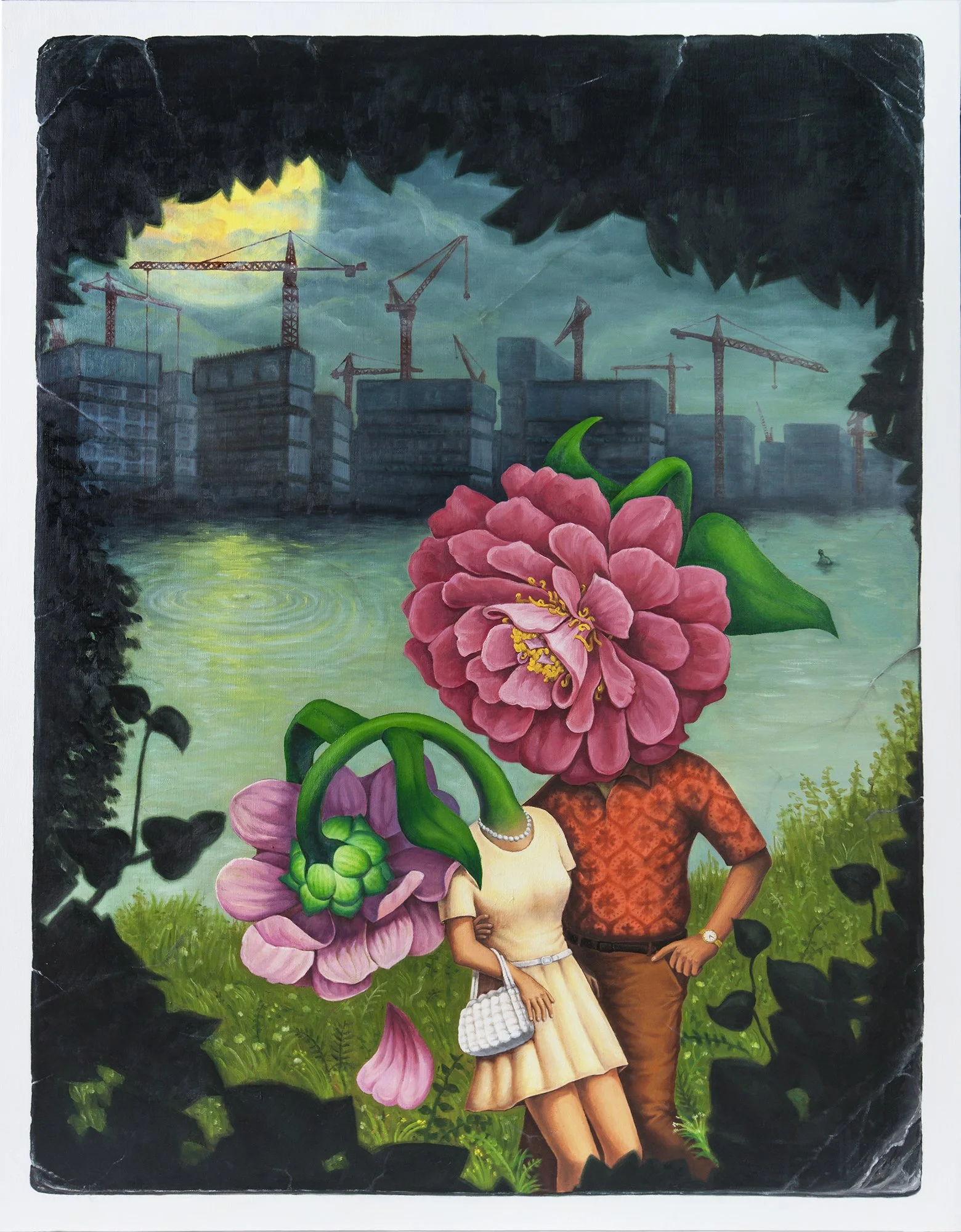
그날은 아무일도 없었지 Oil on canvas, 91x116.8cm, 2010
기억은 언제나 사소한 틈에서 시작된다. 아무 일도 없었던 날의 한 장면이, 지금의 나를 가장 아프게 만든다. 말하자면 아무 일도 없던 날, 사진 한 장처럼 조용했지만, 돌이켜 보면 그 안엔 모든 것이 이미 시작되고 있었던 날, 기억도, 상처도, 무너짐도…
Nothing Happened That Day
Memory often begins in the smallest gaps. A scene from a day when nothing happened can hurt the most. It was quiet, like a single photograph. Yet in retrospect, everything had already begun memory, wounds, collapse.
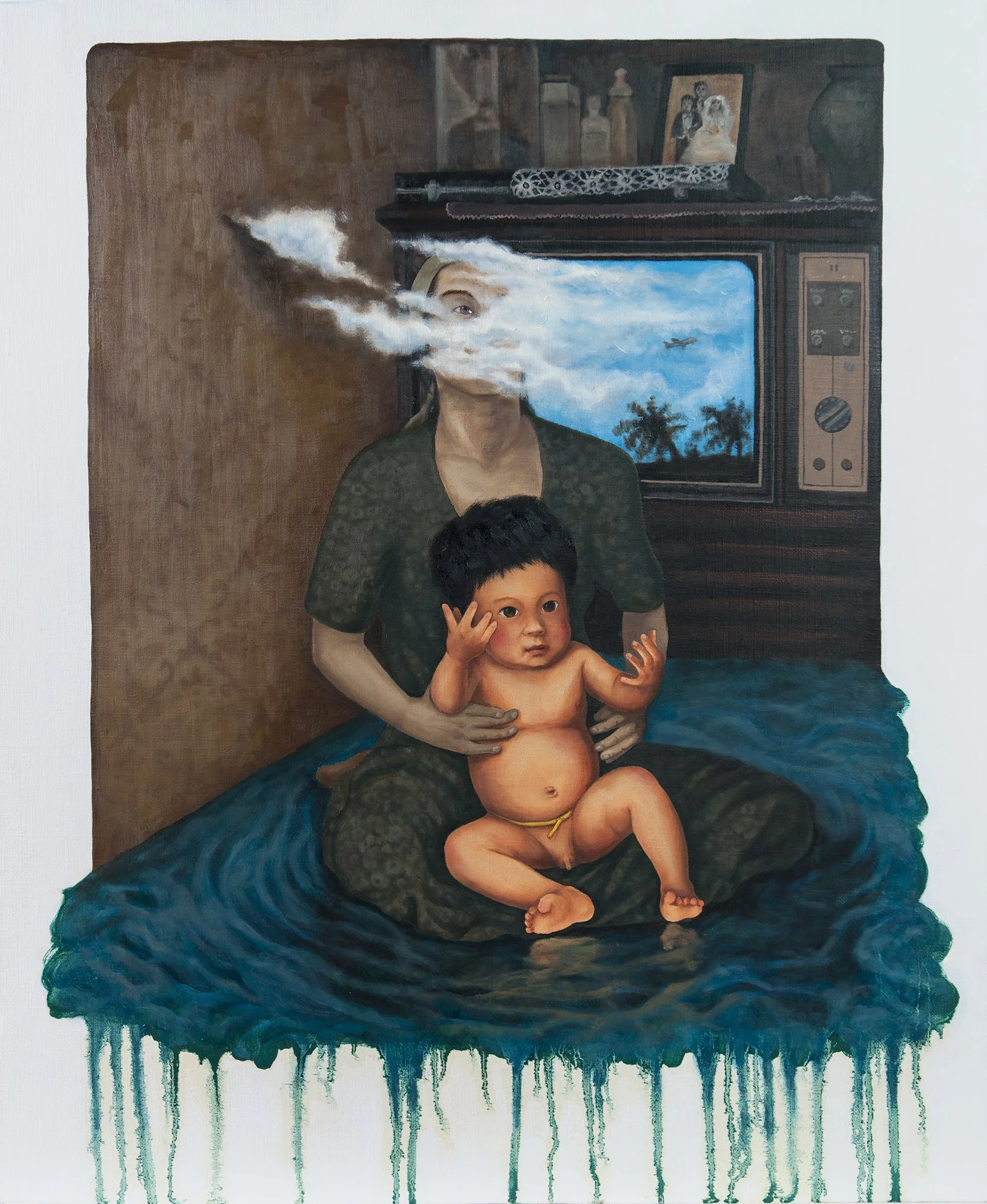
멀리 떠나는 꿈. 그리고 여름 Oil on canva,s 72.7x60.6cm, 2010
엄마와 나. 엄마는 구름에 가려지고, 나는 칼라로 남는다. 흑백의 엄마와 칼라의 나 사이에 흐르는 시간의 간극. 흘러내리는 물은 기억인지 시간인지 알 수 없지만, 여름이었다. 먼 곳으로 떠나는 꿈을 꾼 날.
A Dream of Leaving Far Away, and Summer
My mother and I. She fades into black-and-white clouds; I remain in color. Between us flows the gap of time. The water running down whether memory or time itself is unclear. But it was summer. The day I dreamed of leaving for somewhere far away.
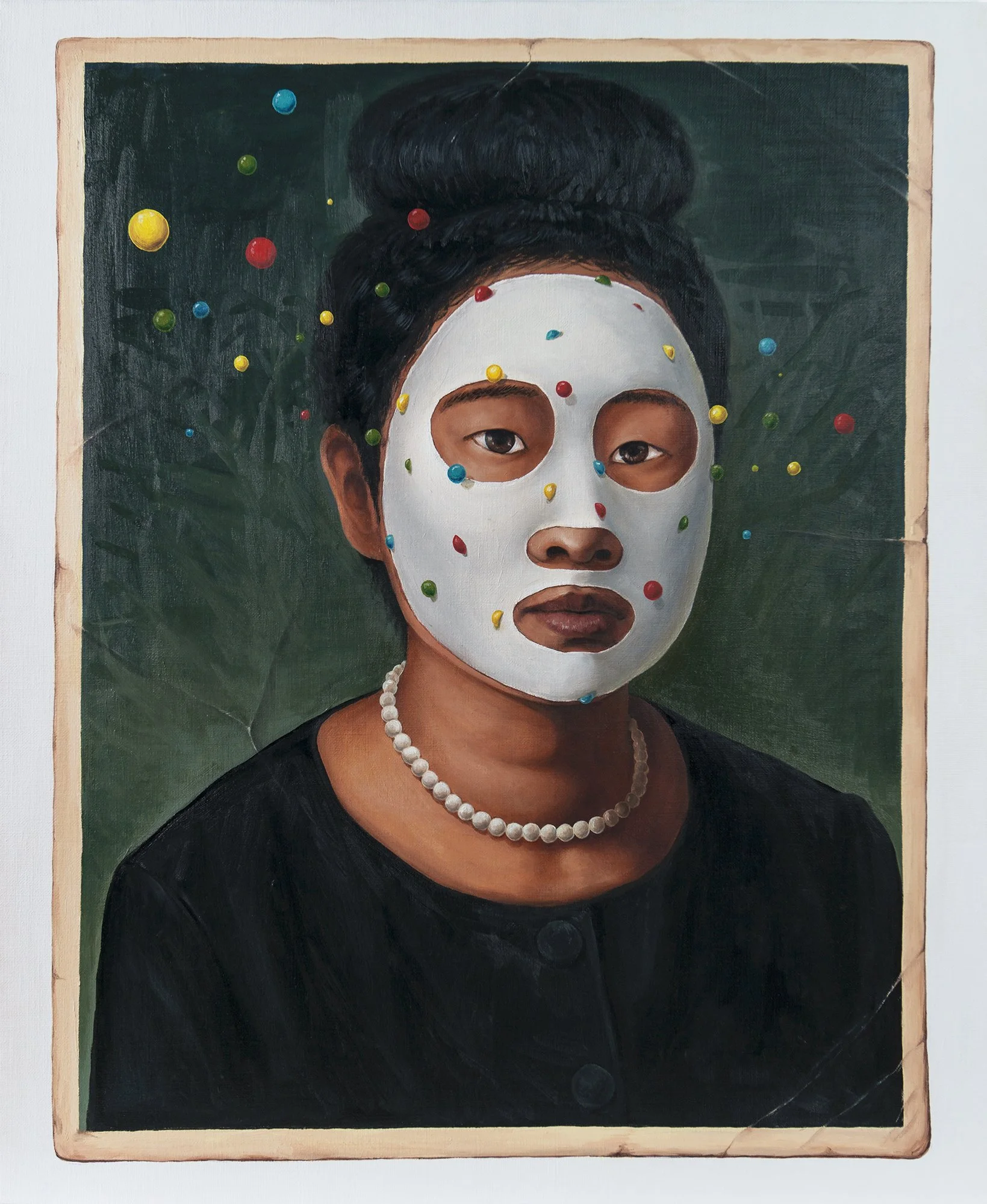
1968, 엄마의 초상 Oil on canvas, 72.7x60.6cm, 2010
오래된 증명사진. 그 위에 덧입혀진 마스크팩과 알록달록한 알갱이들. 얼굴에 스며들어 가는 보습처럼, 어떤 감정과 기억들이 엄마의 얼굴 속으로 흘러들어간다. 화장품이 아니라 마음의 레이어. 그 시절 엄마의 삶이 담긴 초상.
1968, Portrait of My Mother
An old ID photograph. On top of it, facial masks and colorful particles are layered. Like moisture seeping into skin, emotions and memories flow into her face. This is not cosmetics, but layers of the heart a portrait containing my mother’s life from that era.
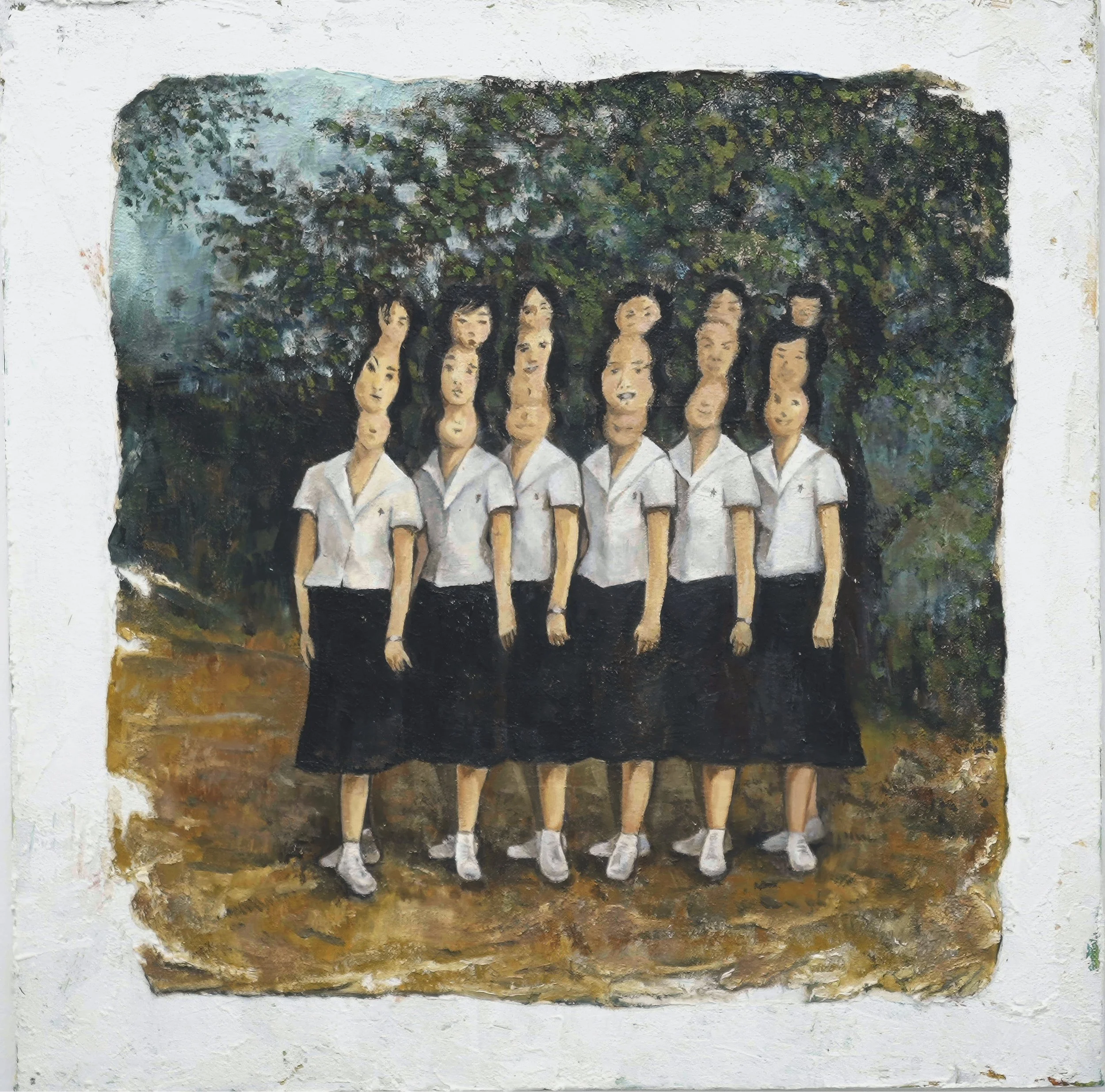
기념사진, 1966 Oil on canvas, 37.9X37.9, 2025
이 작품은 어머니의 고등학교 2학년 시절로 추정되는 단체 사진을 바탕으로 제작되었다. 화면 속 인물들은 교복을 입고 정갈히 줄을 서 있지만, 그 얼굴들은 과도하게 늘어나거나 겹쳐지며 기묘하게 흔들린다. 이는 마치 오래된 사진이 스캔 과정에서 왜곡된 것처럼, 또는 기억의 파편이 시간의 흐름 속에서 흘러내리는 듯한 인상을 준다
Commemorative Photograph, 1966
This work is based on a group photograph believed to depict my mother during her second year of high school. The figures stand neatly in uniform, yet their faces are stretched, overlapped, and oddly distorted. It feels as though the image has been warped during scanning, or as if fragments of memory are slipping away through time.
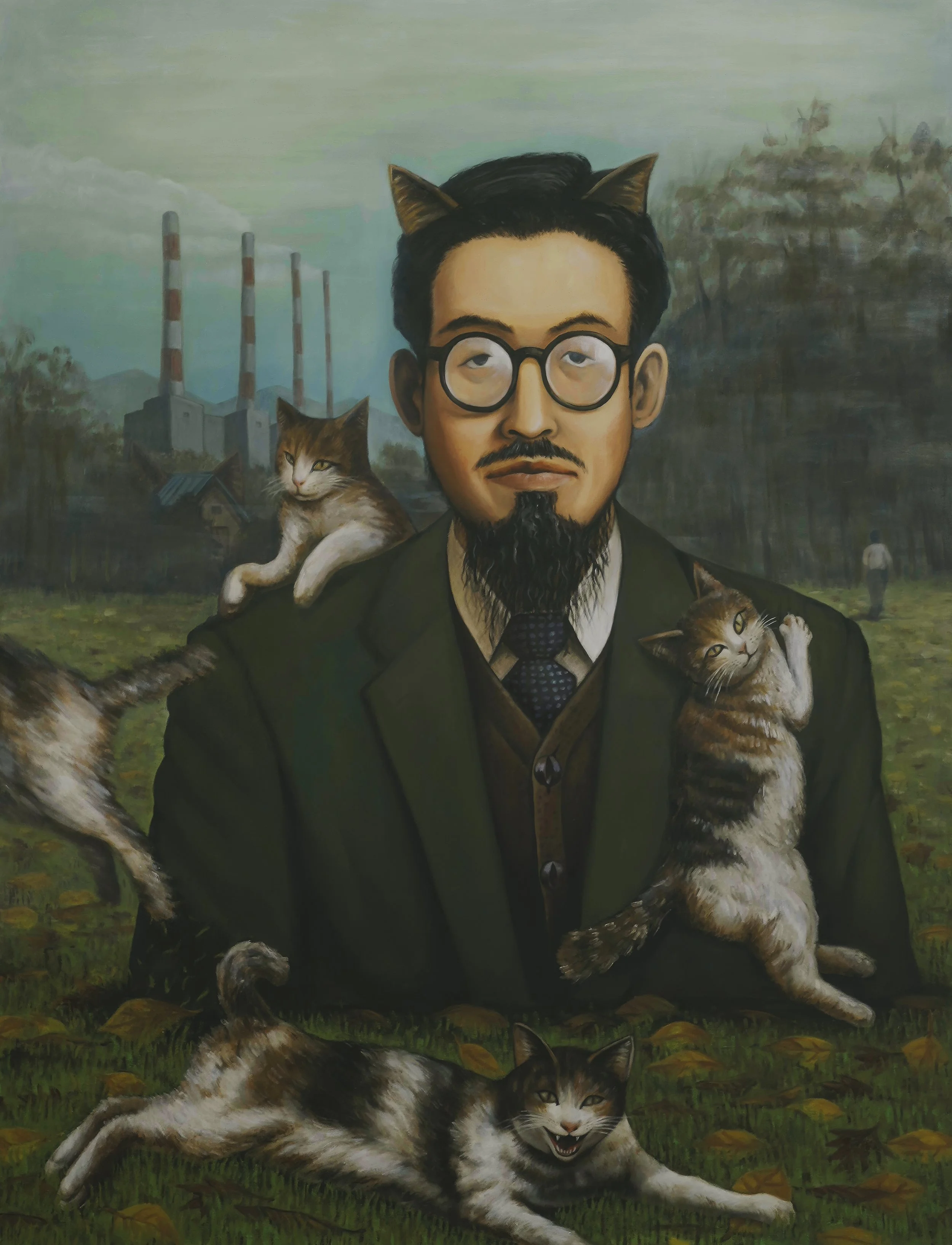
이방인, 1956 on canvas, 72.7x90.9cm, 2012
외할아버지의 사진 위에 겹쳐진 고양이들. 가족의 일원이지만 낯선 사람. 만나지 못한, 그러나 피로 연결된 존재. 비현실적일 정도로 낯선 그의 사진은 마치 외계인 같기도 하고, 오래된 영화의 한 장면 같기도 하다. 고양이들은 고요히 그러나 의심스러운 표정으로 주변을 감싼다. 이 작품은 외로움과 이질감에 대한 가족사적 기억의 한 컷이다.
Stranger, 1956
Cats layered over a photograph of my maternal grandfather. A family member, yet a stranger. Someone I never met, yet am bound to by blood. His image feels unreal—like an alien, or a frame from an old film. The cats surround him quietly, with expressions of suspicion. This work captures a fragment of family memory shaped by loneliness and estrangement.
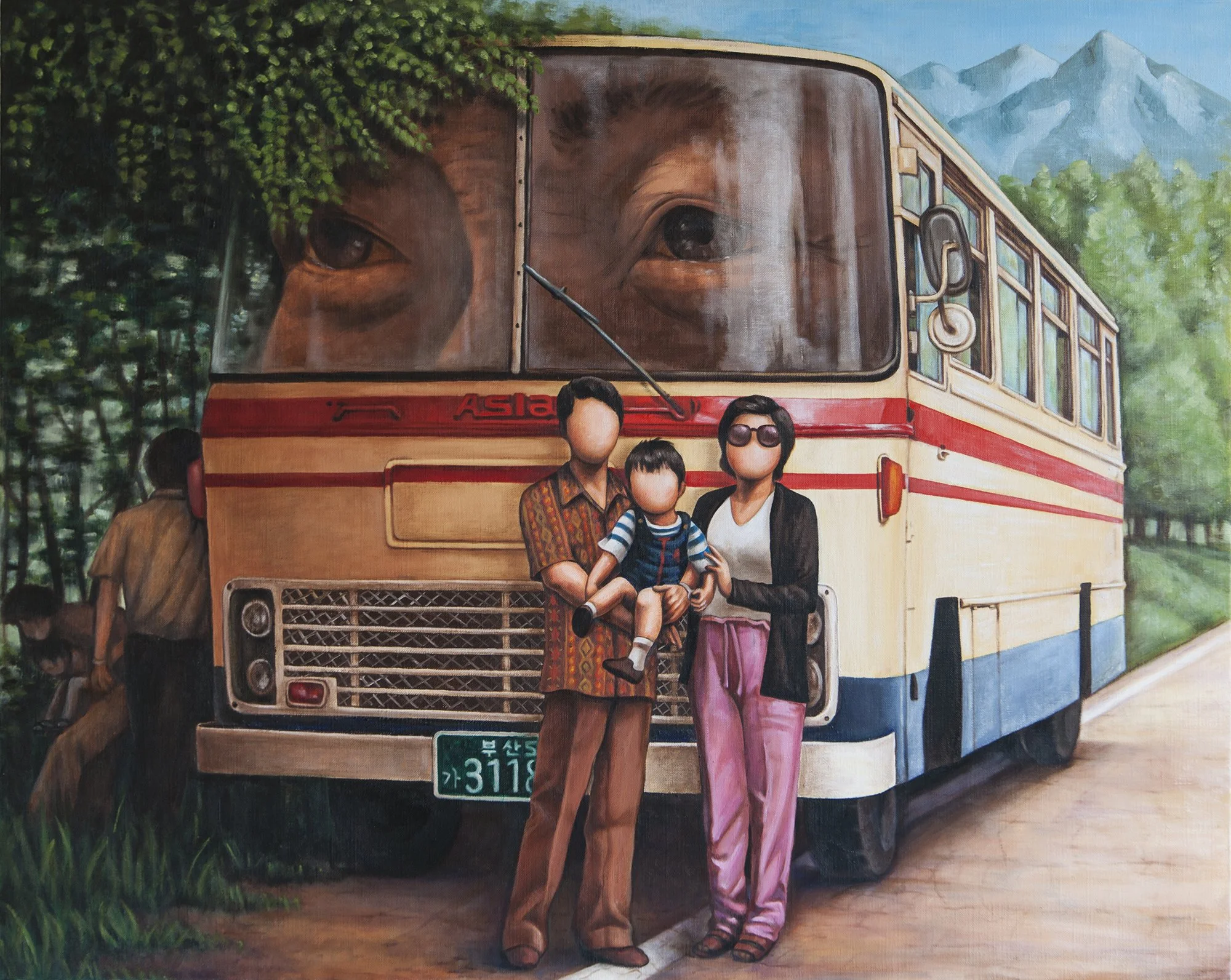
말이 없던 여행 Oil on canvas 72.7x90.9cm 2013
오래된 가족여행의 기억. 휴게소도 없던 시절, 갓길에 세운 버스. 차창에 비친 아버지의 얼굴은 유령처럼 흐릿하고, 안경 대신 유리창이 눈이 된다. 가족은 여행 중이지만, 모두 다른 곳을 바라보고 있고, 말이 없다. 마치 이승에서 마지막으로 떠나는 길 같기도 하다. 배경은 실재하지 않는 에베레스트처럼 가공된 풍경 — 그것은 기억 속 허상의 장소이자, 우리가 도달할 수 없는 어딘가
A Silent Journey
A memory of an old family trip. In an era without rest stops, the bus is pulled over onto the shoulder of the road. The father’s face reflected in the window appears ghostlike and blurred; the glass replaces his eyes instead of glasses. Although the family is traveling together, everyone looks in a different direction. No one speaks. It feels almost like a final departure from this world. The background resembles a fabricated Everest—a landscape that does not truly exist. It is both a phantom place in memory and a destination we can never reach.
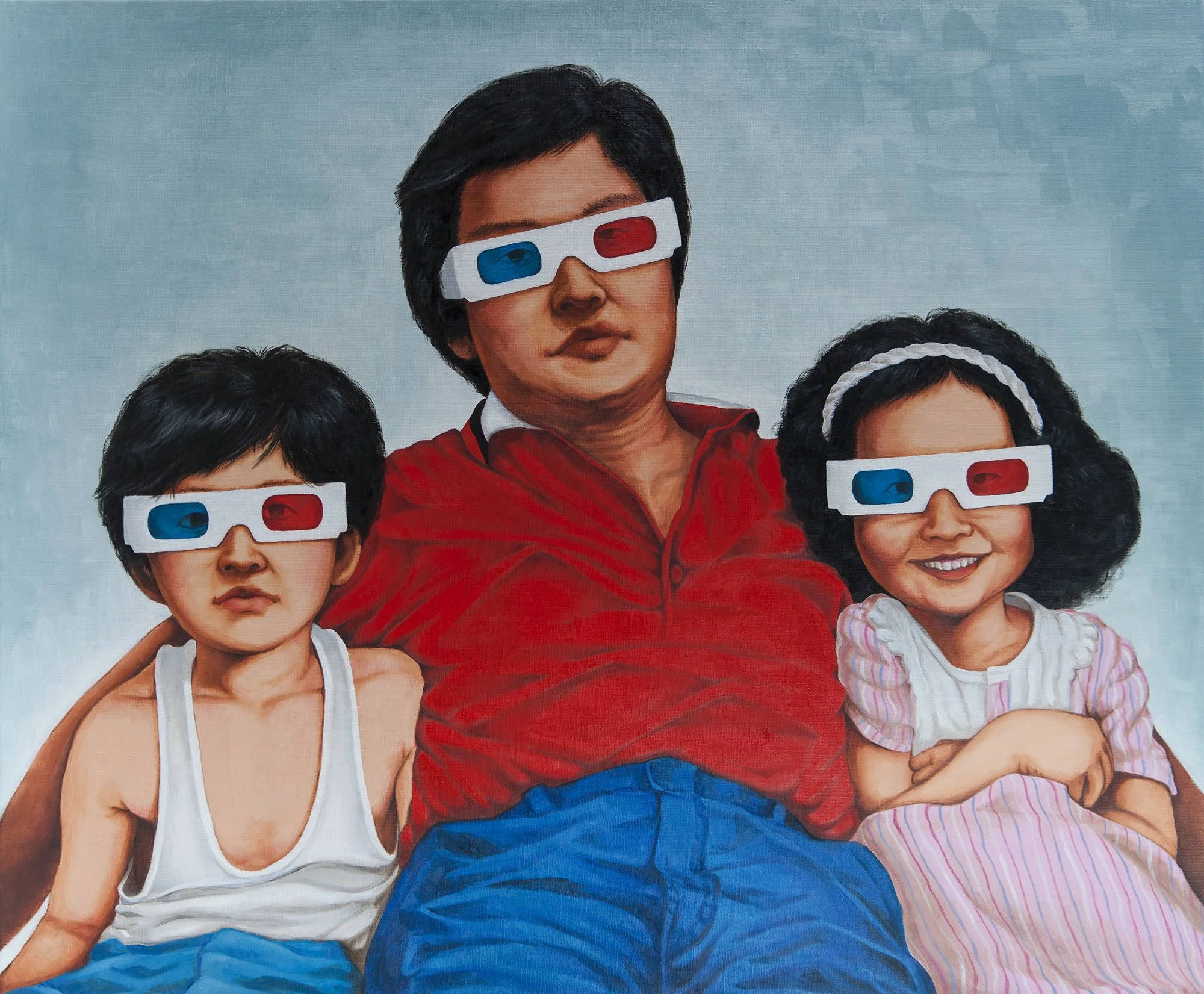
아빠와 나와 여동생 Oil on canvas, 72.7x60.6cm, 2011
3D안경을 쓴 아빠와 어린 나, 그리고 여동생. 그들은 웃고 있고, 카메라를 바라보고 있다. 하지만 지금 나는 그 안경 너머에서 그들을 보고 있다. 이 장면은 기억 속 사진이자, 지금도 나를 바라보는 잔상이다. 우리는 한 장면 속에 있고, 그 시선은 아직도 나를 따라온다.
My Father, My Sister, and Me
My father wearing 3D glasses, myself as a child, and my younger sister. They are smiling, looking directly at the camera. But now, I am the one looking at them from the other side of those glasses. This scene is both a photograph from memory and an afterimage that still gazes back at me. We remain inside a single frame, and that gaze continues to follow me.
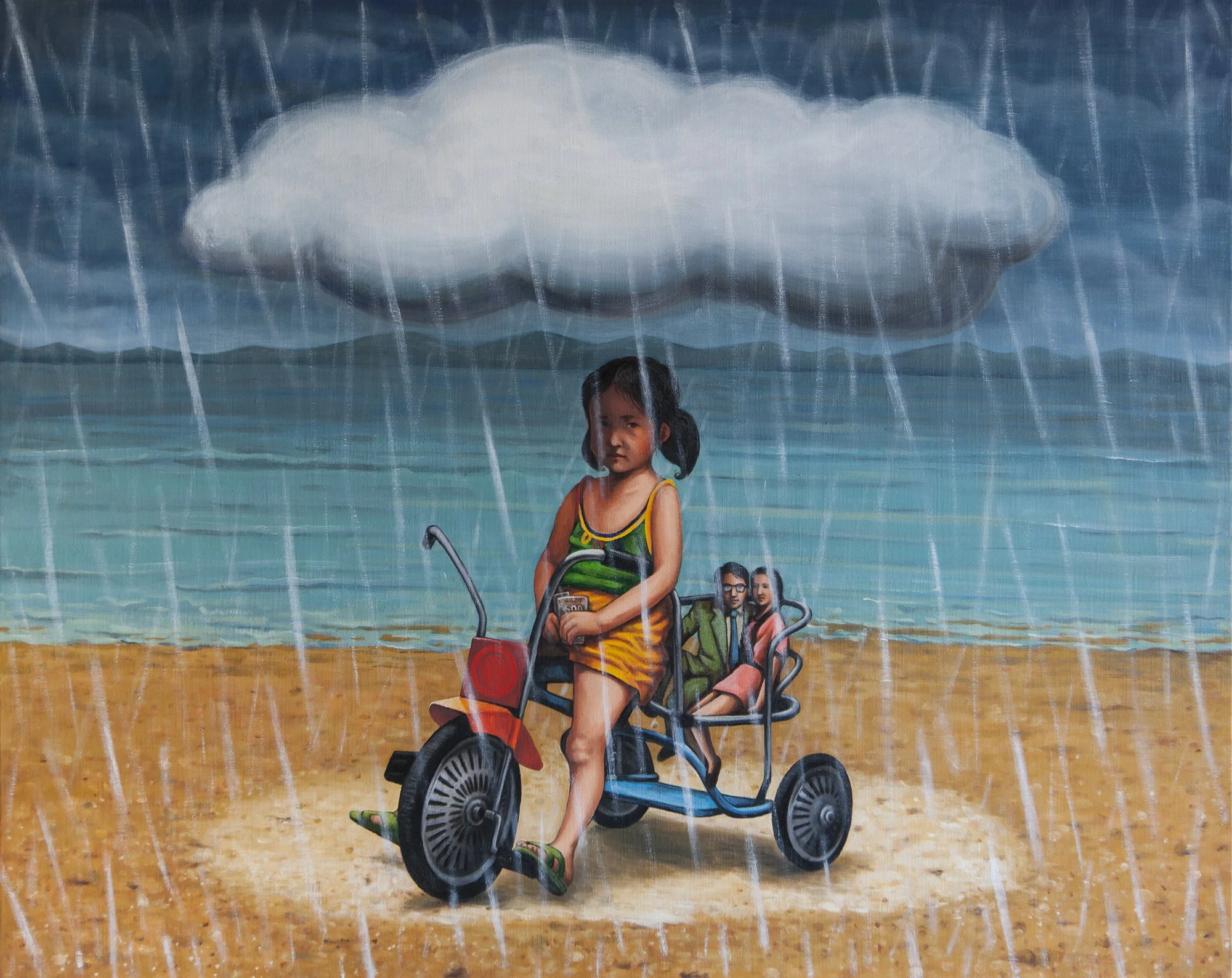
구름이 비를 가리네 Oil on canvas, 72.7x90.9cm, 2013
어린 여동생의 사진을 바탕으로 한 장면. 부모가 일찍 떠난 이후의 세상. 구름은 때로 비를 내리지만, 때로는 그 비를 가리기도 한다. 보호인지 부재인지 알 수 없는 감정 속에서 아이는 세상을 마주한다. 그림자는 여전히 무겁고, 하늘은 낮게 깔려 있다.
Clouds Hide the Rain
A scene based on a photograph of my younger sister. The world after our parents left too early. Clouds sometimes bring rain, and sometimes conceal it. Within this ambiguous space—between protection and absence—the child faces the world. The shadows remain heavy, and the sky hangs low.
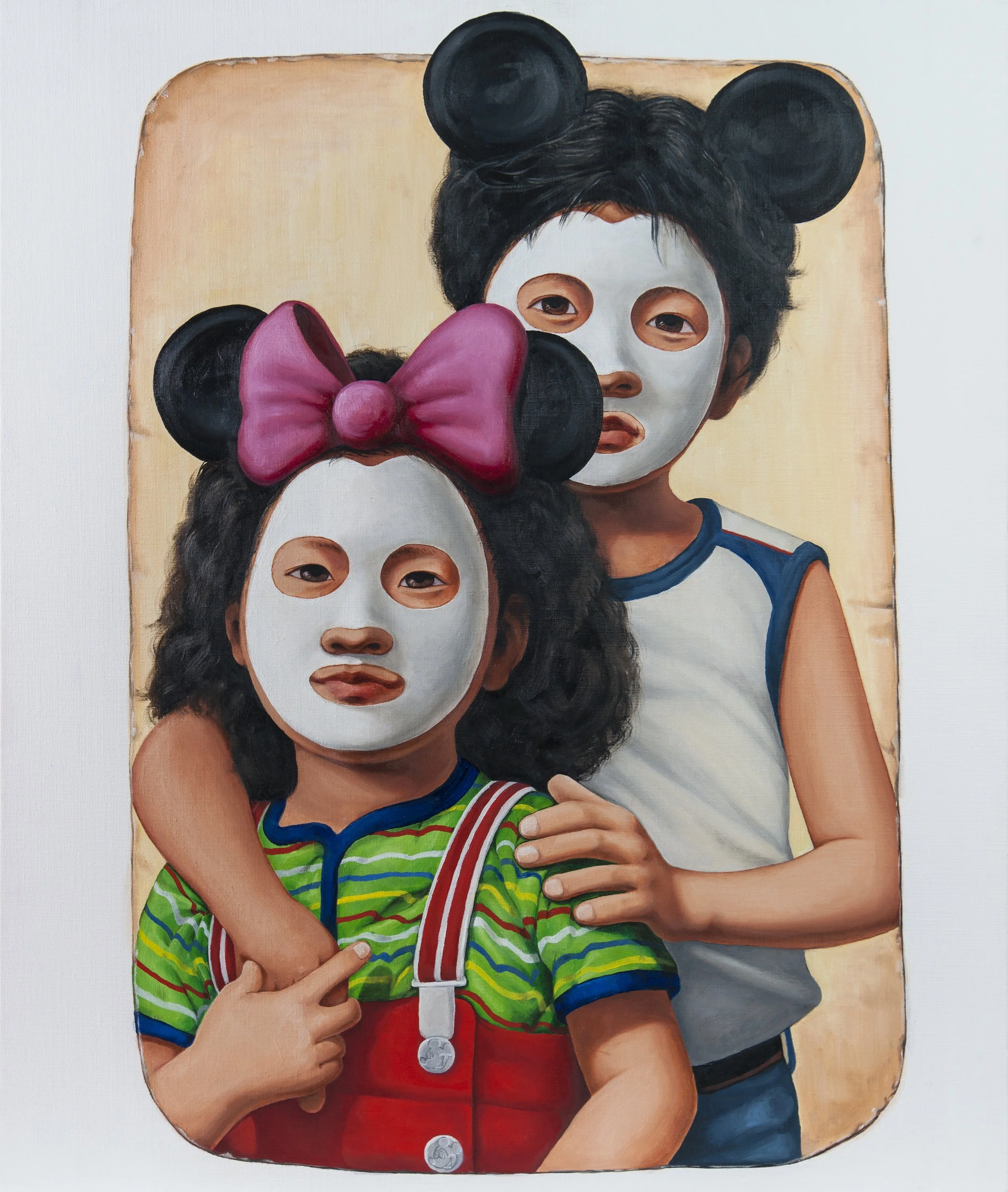
동생과 나 Oil on canvas, 72.7x60.6cm, 2013
같은 팩을 하고 있지만 다른 표정. 미키와 미니처럼 웃기지만 불편한 쌍둥이성. 팩은 얼굴을 감추지만 가장 중요한 부분을 드러낸다. 마치 반쯤 가려진 내면, 혹은 정체성에 대한 은유. 유년의 기억은 어쩐지 코스튬 플레이 같고, 조금은 기이하다.
My Sister and I
We wear the same facial mask, yet our expressions differ. Like Mickey and Minnie, we appear humorous but slightly uncomfortable—a pair with twin-like qualities. The mask conceals our faces, yet paradoxically reveals something essential. It becomes a metaphor for a half-covered inner self, or for identity itself. Childhood memories feel oddly like costume play familiar, yet strangely unsettling.
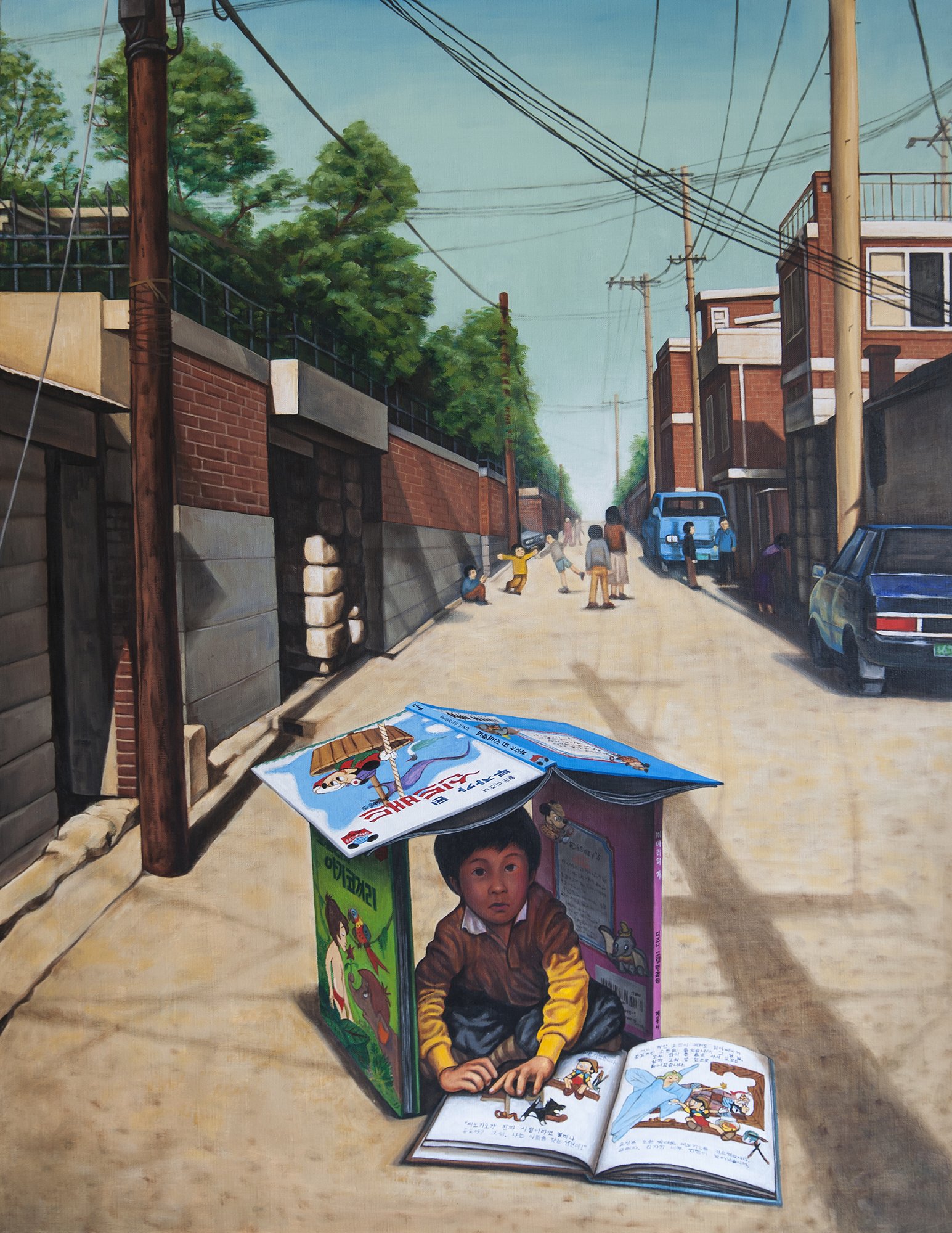
조금은 숨어 있었어 Oil on canvas, 91x116.8cm, 2012
아이들은 종종 밀폐된 공간에 숨곤 한다. 이 아이는 만화책으로 만든 작은 공간 속에 웅크리고 있다. 현실이 버거울 때, 우리는 종이로 만든 세계 속으로 들어간다. 그곳은 어머니의 자궁처럼 조용하고 따뜻한 피난처다. 그러나 동시에 세상과 단절된 외로운 공간이기도 하다.
I Was Hiding, Just a Little
Children often hide in enclosed spaces. This child curls up inside a small shelter made of comic books. When reality becomes overwhelming, we retreat into worlds made of paper. It is a quiet, warm refuge—like a mother’s womb. Yet at the same time, it is a lonely space, cut off from the world.
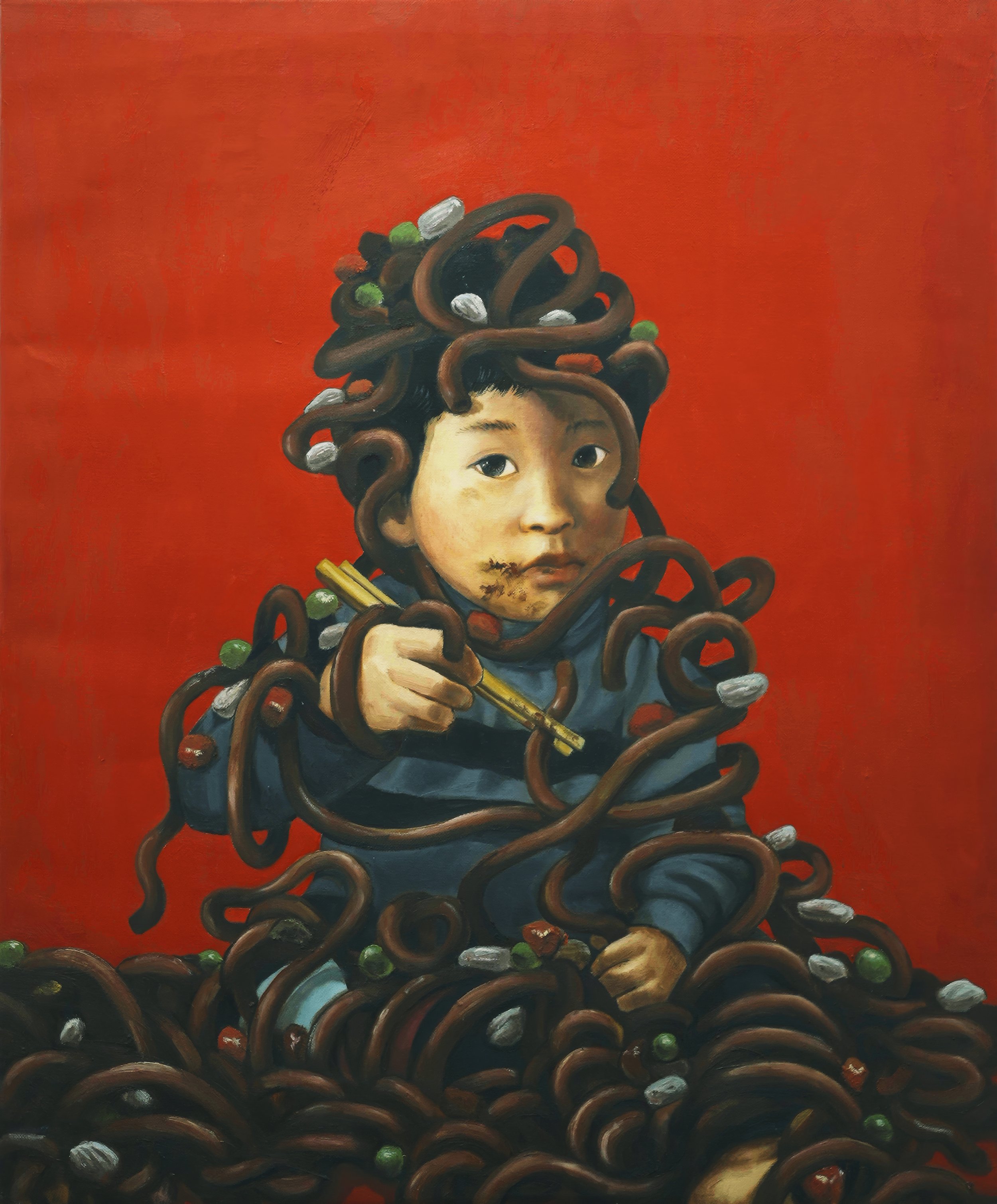
짜장면 on canvas, 72.7x60.6cm, 2012
짜장면은 단순한 음식이 아니라, 가족의 외출, 생일, 기쁨의 날과 연결된 상징 같은 존재였다 .이 그림은 그 기억 속에 푹 빠져 있던 아이의 초상이며, 삶이 주는 달콤함과 어질러짐을 함께 끌어안고 있는 유년기의 정직한 기록
Jajangmyeon
Jajangmyeon was more than food. It symbolized family outings, birthdays, moments of joy. This painting portrays a child immersed in that memory an honest record of childhood that embraces both sweetness and disorder.
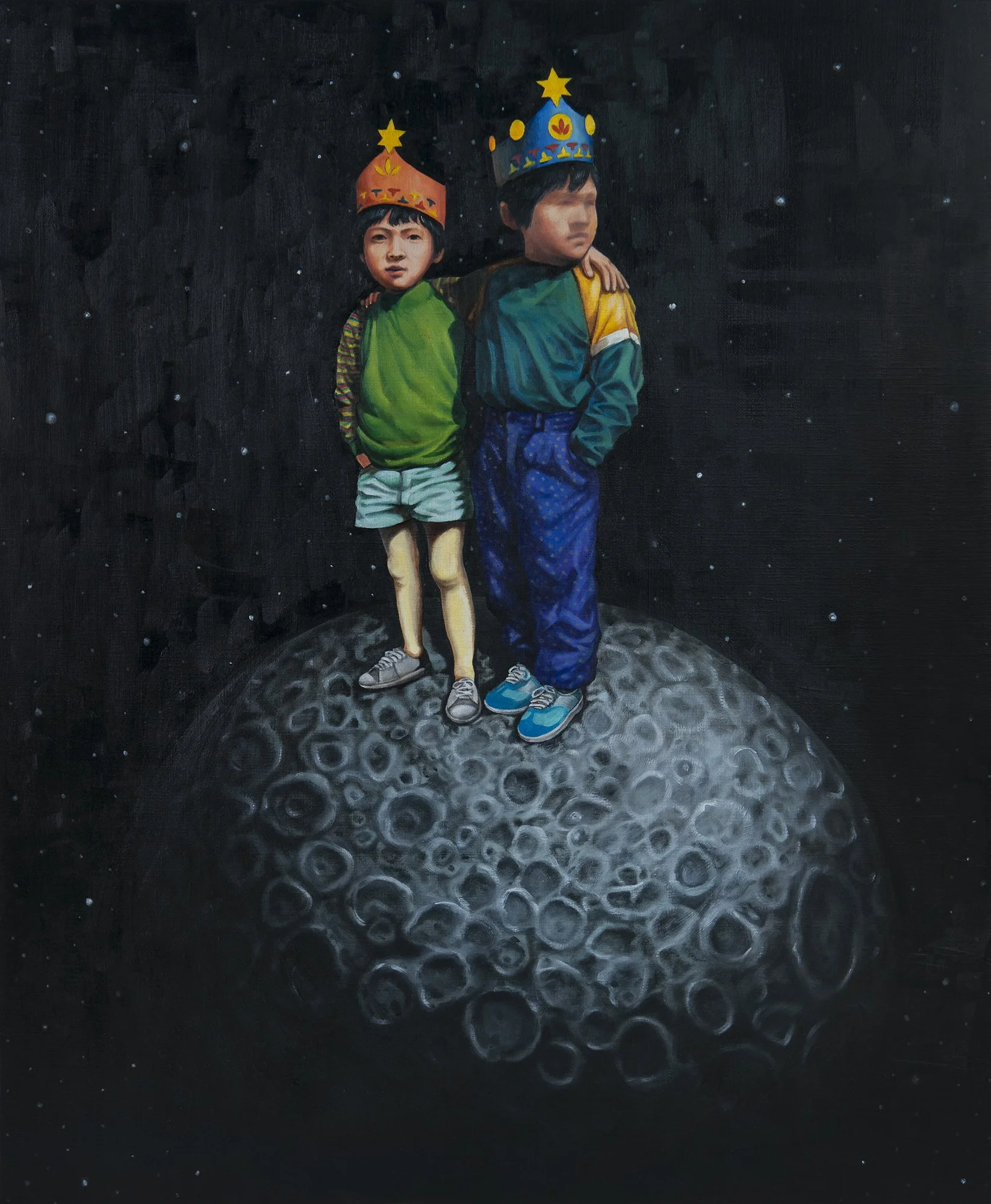
아무도 보지 않는 쪽에서 Oil on canvas, 72.7x60.6cm, 2012
달의 뒤편처럼, 보이지 않는 공간에서 벌어진 장면. 어린 시절 생일잔치. 흔들린 친구의 얼굴은 기억에서 사라졌고, 나만 또렷하다. 어린 왕자처럼 종이 왕관을 쓰고 서 있는 작은 아이들. 잊혀진 존재들, 흐려진 기억들, 그러나 분명히 존재했던 감정.
On the Side No One Sees
Like the dark side of the moon, a scene unfolds in an unseen space. A childhood birthday party. The blurred faces of friends have faded from memory, leaving only me in sharp focus. Children stand wearing paper crowns, like little princes. Forgotten presences, faded memories yet emotions that unquestionably once existed.
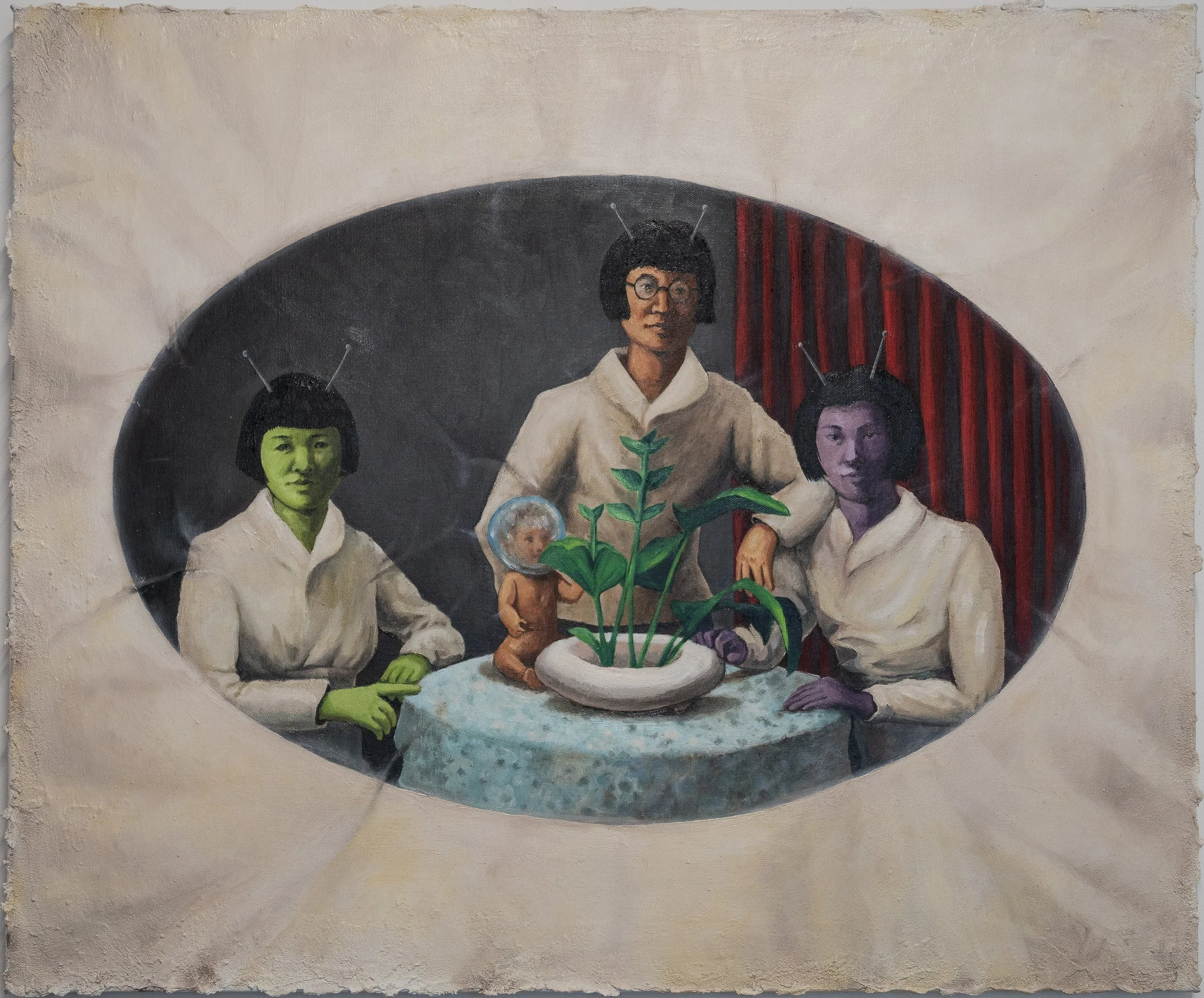
시간이 멈춘 방 Oil on canvas, 72.7x60.6cm, 2024
오래된 가족사진을 재현한 이 그림은, 외계에서 온 듯한 피부색의 인물들과 낯선 포즈, 그리고 연극 무대처럼 연출된 공간이 어우러져 있다.이들은 실제로 작가의 외가 쪽 이모들로, 어딘가 생경한 이 장면은 20세기 중반의 스튜디오 사진 특유의 과장된 정형성과 정적을 그대로 보여준다.
A Room Where Time Has Stopped
This painting recreates an old family photograph. Figures with alien-like skin tones, unfamiliar poses, and a stage-like setting come together. They are, in fact, the artist’s maternal aunts. The scene captures the exaggerated formality and stillness typical of mid-20th-century studio photography.
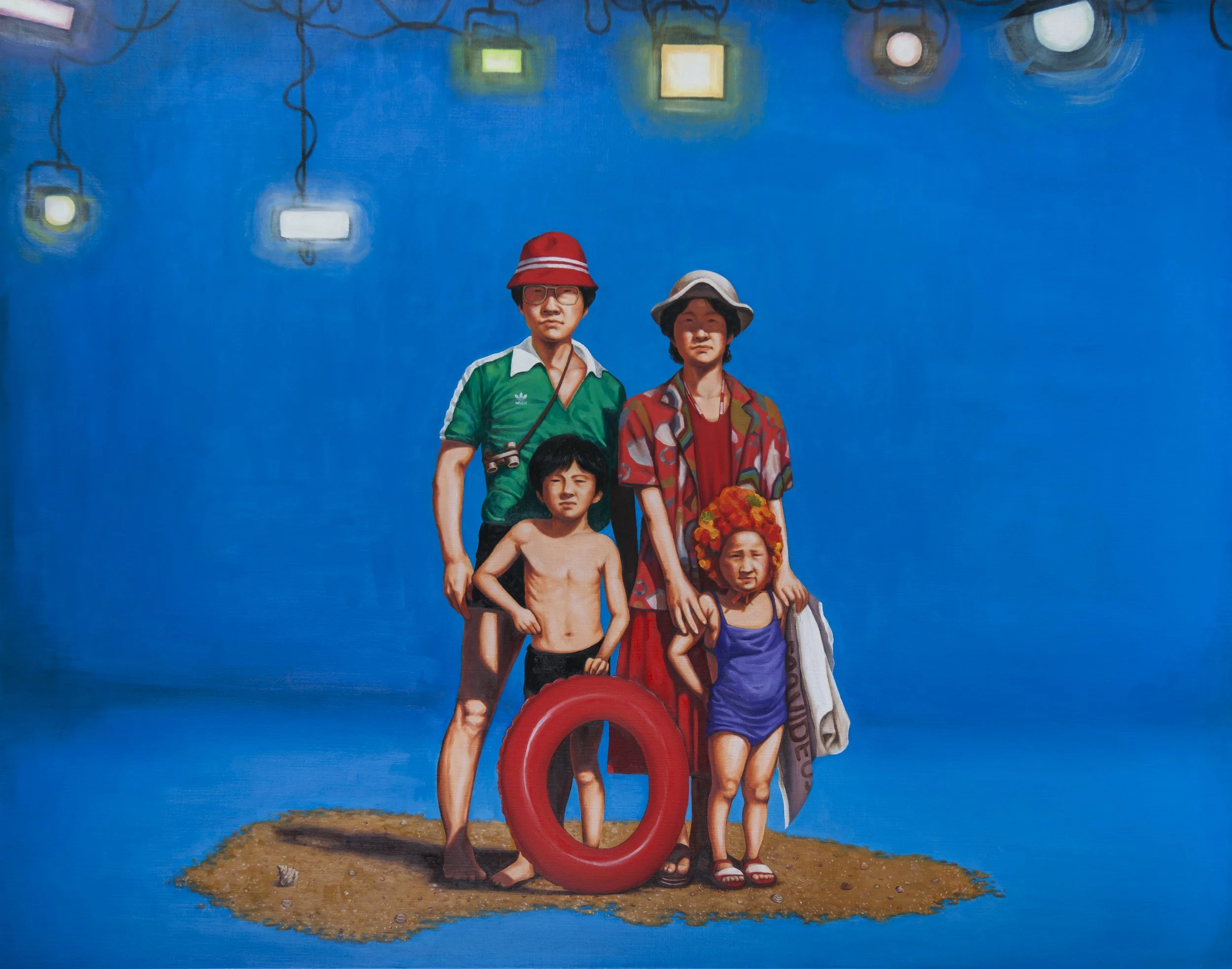
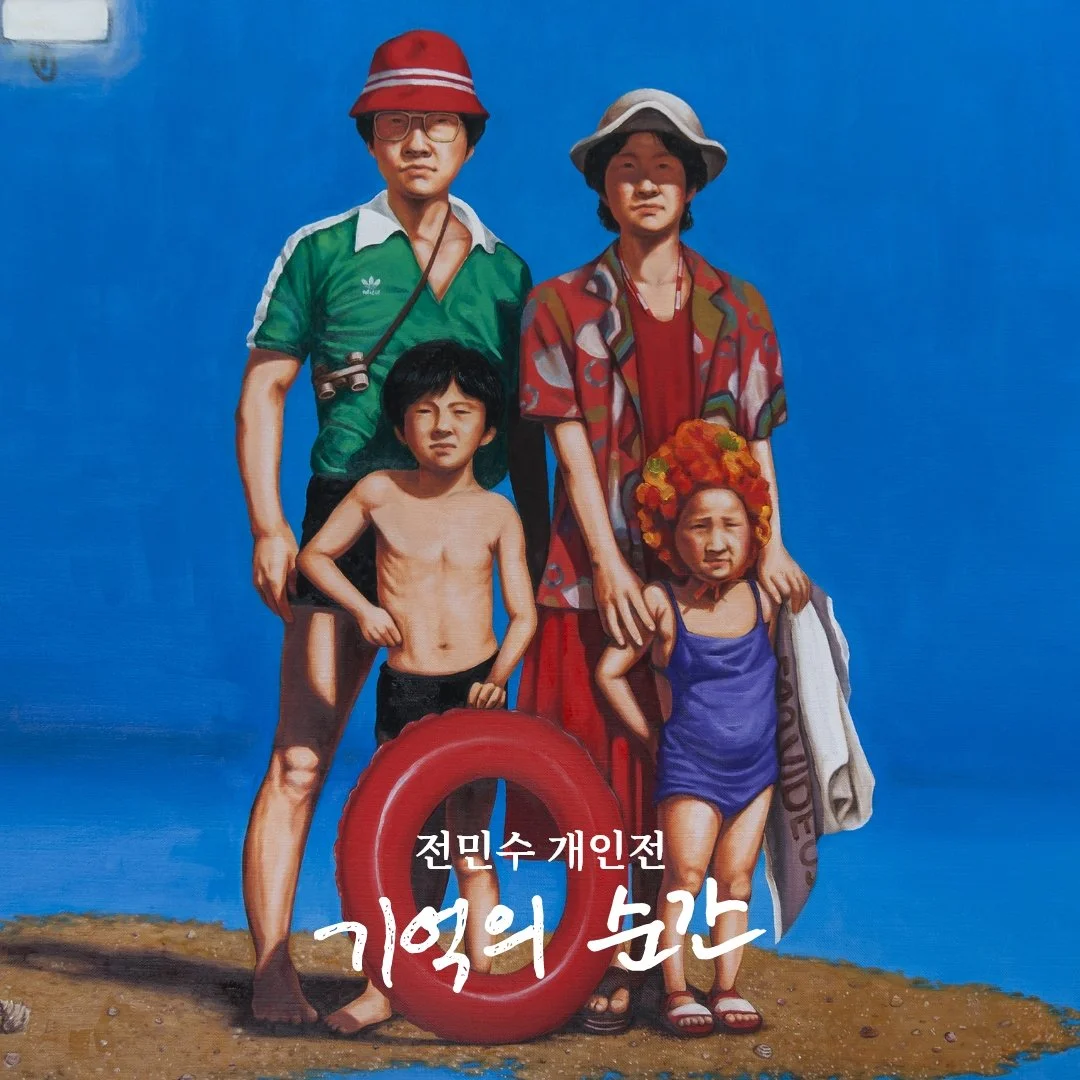
푸른 배경 위에 우리 Oil on canvas, 91x116.8cm, 2012
가족의 여행 사진처럼 보이지만, 배경은 모두 합성된 크로마키. 푸른 배경 위에서 어디든 갈 수 있는 척하지만, 그어디도 현실이 아니다. 아버지는 권위 있게 서 있고, 가족들은 지쳐있다. 현실의 가족인지, 부재한 기억인지 헷갈리는 장면 속에서 가상과 진실이 교차한다.
Family on a Blue Background
At first glance, this image resembles a family travel photograph set against a blue background.
Yet the background is entirely chroma-keyed, a fabricated space. Standing before the blue screen, the family appears as if they could go anywhere— but in truth, none of these places exist. The father stands authoritatively, while the rest of the family looks exhausted. Within this ambiguous scene—where it is unclear whether we are witnessing a real family or an absent memory— the virtual and the real quietly intersect.
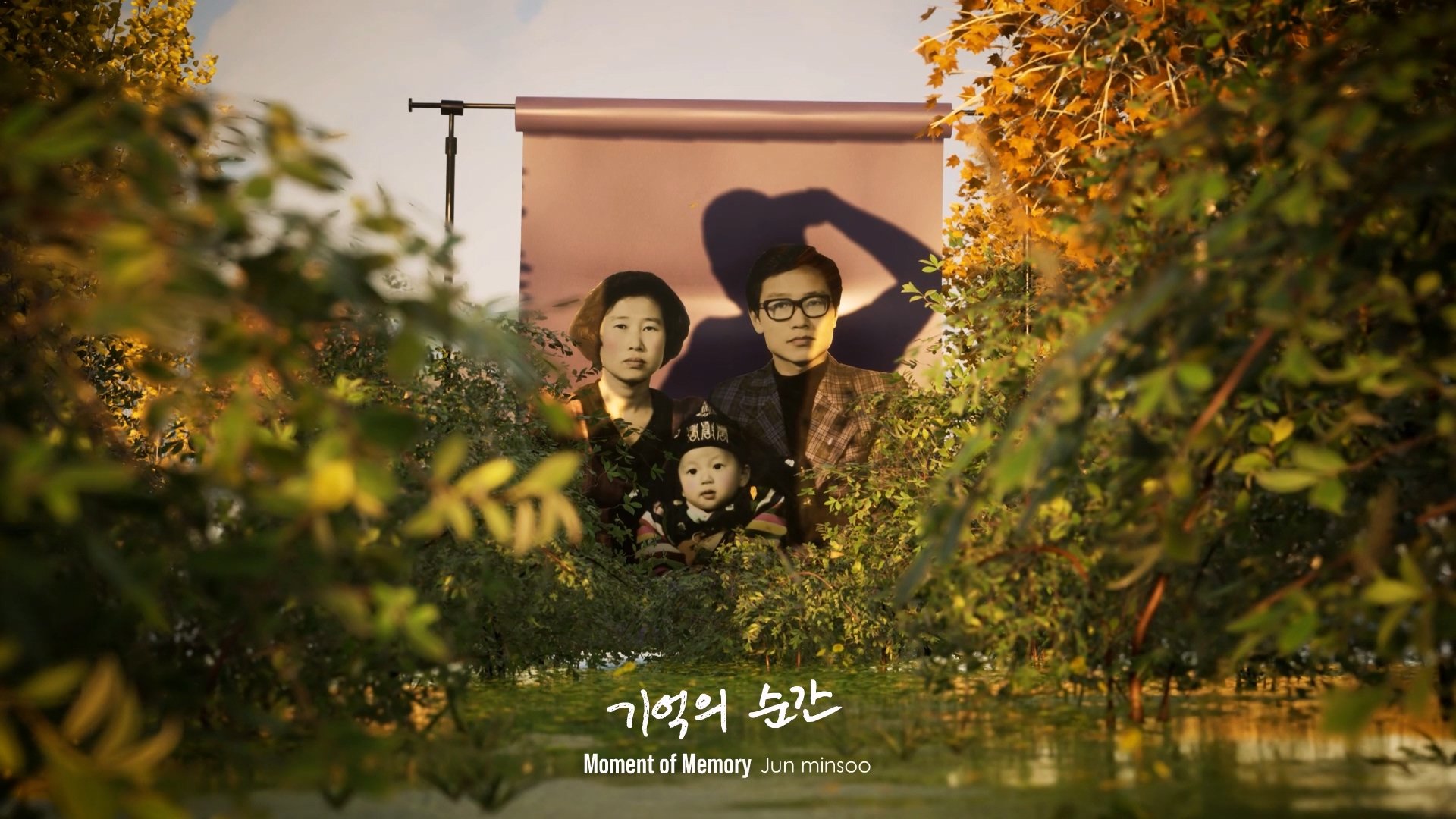
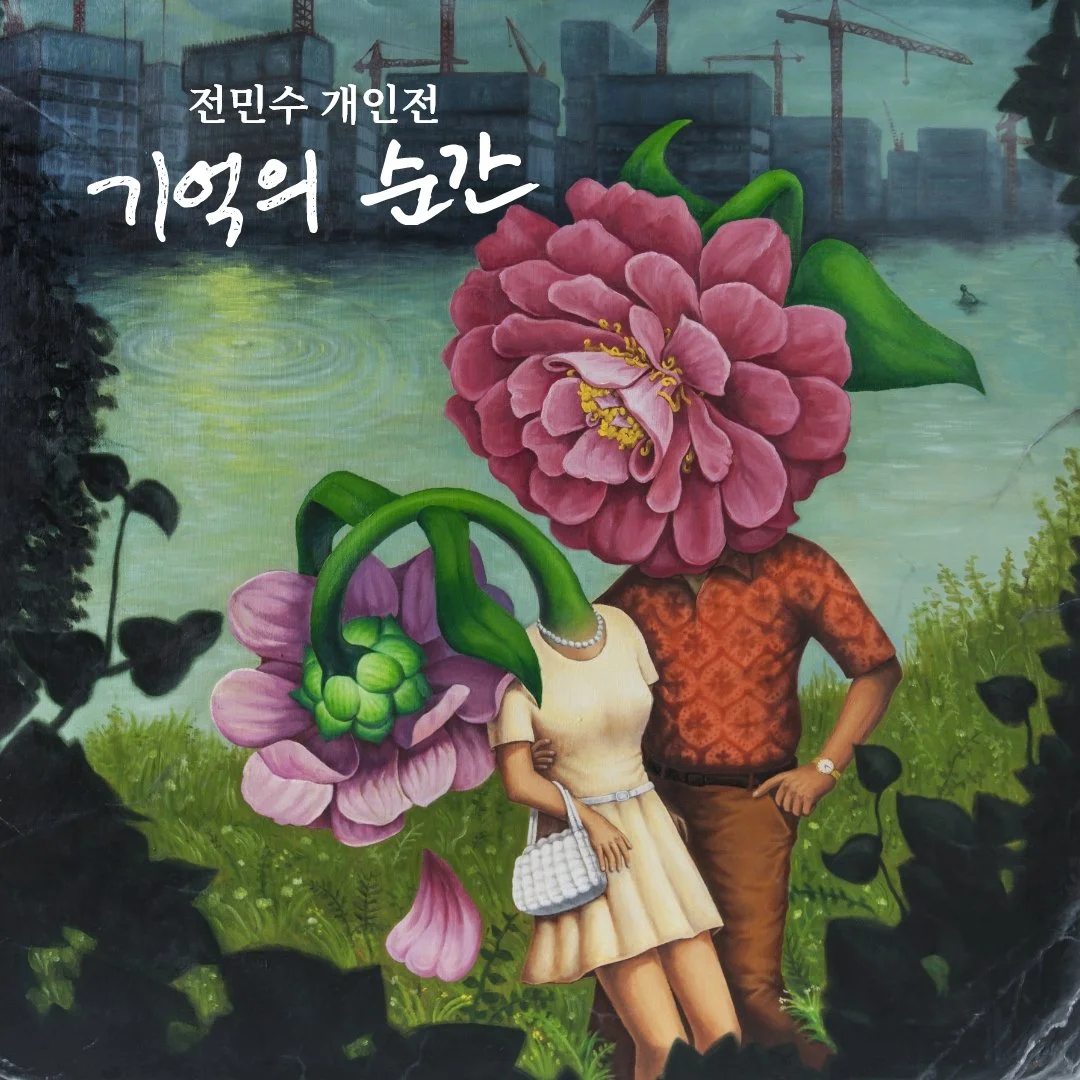
기억의 순간
기억은 언제나 흐릿하게 우리 곁을 지킨다. 분명히 존재했던 어떤 감정, 어떤 표정, 어떤 장소는 시간의 흐름 속에서 점차 희미해지고, 그 빈자리를 상상과 왜곡, 그리고 마음속 잔상이 채워나가게 된다. 전민수 작가의 회화는 바로 그 틈 — 기억과 상상, 현실과 허상의 경계에서 시작된다.
작가의 화면에는 가족이 있다. 그러나 그 가족은 우리가 알고 있는 단란하고 명확한 ʻ가족사진’의 이미지와는다르다. 크로마키 배경 앞에 서 있는 가족은 여행지의 사진처럼 보이지만, 사실상 어디에도 도착하지 않은 존재들이다. 푸른 배경은 어디든 갈 수 있을 것 같은 환상을 부여하지만, 결국은 도달하지 못한 장소, 되돌릴 수 없는과거의 시간만을 환기시킨다. 아버지는 카메라 앞에서 여전히 권위 있게 서 있지만, 가족은 그 시선 너머에서 지쳐 있고, 무언가를 말하지 못한 채 그 자리를 버티고 있다.
이러한 작업 속 장면들은 때때로 말이 없던 여행의 풍경을 소환하기도 한다. 휴게소조차 없던 시절, 갓길에 정차한 버스, 차창에 비친 흐릿한 얼굴, 서로를 바라보지 않는 가족들. 말없는 그 여행은 작가에게 있어 현실의 가족인지, 기억 속의 유령인지조차 분간되지 않는 ʻ기억의 몽타주’다. 전민수의 회화는 이러한 개인적 회상의 편린을 통해, 우리 모두가 경험했을 법한 보편적 감정의 풍경을 끄집어낸다.
작가의 세계에는 유년의 고요한 피난처 또한 존재한다. 만화책으로 만든 작은 공간에 웅크린 아이의 모습은 종이로 된 상상의 세계가 얼마나 따뜻하고 안전한지, 또 동시에 얼마나 고립되고 외로운지를 보여준다. 그곳은 어머니의 자궁처럼 평온하지만, 세상과 단절된 폐쇄의 공간이기도 하다. 아이는 숨는다. 현실의 복잡함을 견딜 수 없을 때, 우리는 종종 어린 시절의 자기 자신처럼 자신만의 틈을 찾는다. 작가는 그 틈을 세심하게 응시하고, 표현하고 있다.
이러한 작업들은 단순한 과거의 재현이 아니다. 그것은 ʻ재구성된 기억’이다. 카메라 앞에서 웃고 있는 아버지와 아이들, 팩을 하고 웃고 있는 형제, 유리창에 비친 그림자 같은 얼굴들. 각각의 장면들은 마치 오래된 사진을스캔하다가 흔들려버린 듯 왜곡되고, 분절되며, 흐릿하게 재편된다. 오래된 텔레비전 모니터 속에서 분해되는가족의 얼굴처럼, 우리의 기억은 언제나 조각나 있고 편집되며, 어떤 감정은 끝내 말로 다할 수 없다.
따라서 그의 작업들은 단지 작가의 가족사를 보여주는 것이 아니다. 그것은 우리 모두가 간직하고 있는 ʻ사소하지만 지워지지 않는 장면들’에 관한 이야기다. “그날은 아무 일도 없었지.” 작가가 소환하는 이 한 문장은, 결국가장 많은 일이 일어난 날을 가리킨다. 말도 없고, 사건도 없었던 평범한 하루. 하지만 돌이켜 보면 그 속에는 이미 모든 감정의 씨앗들이 심어져 있었다. 상처와 무너짐, 떠남과 소외는 그렇게 조용히 시작된다.전민수의 회화 속 인물들은 종종 어딘가를 떠나고 있다. 칠성 아래에서 첫 생일을 맞이한 아이, 칼라 사진 속의나와 흑백으로 흐릿해진 엄마, 얼굴 위에 알록달록한 입자가 덧입혀진 엄마의 초상. 이들은 모두 지금은 볼 수 없거나, 다시 만날 수 없는 존재처럼 화면을 채운다. “멀리 떠나는 꿈. 그리고 여름.”이라는 문장처럼, 작가의 기억은 계절과 감정의 이미지로 되살아난다. 그것은 시간의 간극을 딛고 흐르는 물이며, 흐릿한 하늘 아래에서 아직 끝나지 않은 질문이다.
작가의 외할아버지와 이모들의 사진은 특히나 강한 낯섦을 안겨준다. 외계에서 온 것 같은 피부색, 무대 위에 세운 듯한 정형화된 자세는 과거라는 시간이 우리에게 얼마나 이질적인 감각으로 다가오는지를 상기시킨다. 가족은 친밀하지만, 동시에 이방인이다. 얼굴은 익숙하지만, 삶은 낯설다. 고양이처럼 주변을 감싸는 감정—의심과거리감—은 작가가 기억을 대하는 방식의 핵심이기도 하다.
작가의 《기억의 순간》은 사진으로 남은 장면들, 그 장면 뒤에 감춰진 감정, 그리고 시간이 만든 왜곡을 그려낸다. 그것은 과거에 대한 단순한 향수가 아니라, 끊임없이 ʻ현재 속으로 다시 살아나는’ 기억의 복원이다. 유년의 감정이란 항상 진지하고, 이상하고, 슬며시 웃음이 나올 만큼 기이하다. 작가는 그 진지하고 이상한 세계를 연극처럼, 혹은 영화의 한 장면처럼 재구성한다.
작가는 묻는다. 우리가 기억하는 가족은 과연 실제였는가? 혹은 우리가 기억하기를 원했던 방식으로만 존재하는 허상이었는가? 하지만, 작가는 그의 회화를 통해 이 질문들을 강요하지 않는다. 다만 조용히, 부드럽게, 한장면 한 장면을 꺼내어 놓는다. 말하자면, 이것은 기억의 한 컷이고, 감정의 앨범이며, 아직도 이어지고 있는 이야기라는 것이다.
그렇게, 작가가 그려낸 ʻ기억의 순간’은 우리 모두의 것이 된다. 한 장의 사진에서 시작된 장면은, 결국 우리의 마음속으로 들어와, 조용히 재생되고 있다.
Moments of Memory (Curatorial Text)
Memory always stays close to us, blurred. Emotions, expressions, and places that once clearly existed gradually fade over time, filled instead by imagination, distortion, and lingering afterimages.Jun Minsoo’s paintings begin precisely in that gap between memory and imagination, reality and illusion. Families appear in his works, but not as warm, complete family portraits. Standing before chroma-keyed backgrounds, they resemble travel photos,
yet they are people who have arrived nowhere.The blue background promises infinite destinations,
but ultimately evokes unreachable places and irreversible time.
The father remains authoritative before the camera, while the family beyond his gaze appears weary and silent. These scenes often summon silent journeys a bus pulled over on a roadside with no rest stops, blurred faces reflected in windows, family members looking elsewhere, unspeaking.
These wordless trips form a montage of memory, somewhere between reality and ghosts of the past.Within the artist’s world exists a quiet childhood refuge. A child curled inside a shelter of comic books reveals how imagination can be both warm and isolating a womb-like peace, yet also a sealed-off space.
These works are not simple reproductions of the past, but reconstructions of memory. Smiling faces, masked siblings, reflections on glass they fragment, blur, and reassemble like damaged scans of old photographs. Like faces breaking apart on an old television screen, memory is always edited, incomplete, and emotionally unspeakable.
Thus, these works are not only about one family. They speak of small yet indelible moments we all carry. “There was nothing that happened that day.” This sentence points to the day when everything truly began quietly, invisibly.
The figures in Jun Minsoo’s paintings are often leaving. They exist like unanswered questions beneath a low sky, flowing through seasons, memory, and time. Photographs of his grandfather and aunts feel especially alien. Family is intimate, yet foreign. Familiar faces, unfamiliar lives.
Moments of Memory is not nostalgia, but the restoration of memories that continuously return to the present. These are fragments, emotional albums, and stories that have not yet ended.
Text by Im Dae-sik
글. 임대식